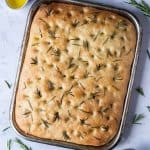
Sea Salt & Rosemary Focaccia
This sea salt and rosemary focaccia is soft, tender, chewy and full of flavour. It is easy to make and is great as a side dish, served with dips or for making sandwiches. Naturally vegan/dairy-free.
Servings 1 loaf
Ingredients
- 500 g (4 ¼ cups) white bread flour
- 10 g (2 tsp) salt
- 7 g (2 tsp) fast action/instant yeast
- 60 ml (¼ cup) olive oil (plus extra for drizzling)
- 350 ml (1 + ½ cups) lukewarm water
- semolina or cornmeal for dusting (optional)
- fresh rosemary
- dried oregano (optional)
- flaky sea salt (I use Maldon)
Instructions
- Place the flour in the bowl of your stand mixer (if you have one) and add the salt to one side and the yeast to the other. Pour in the olive oil and three quarters of the water. Mix, adding the rest of the water gradually, until you have picked up all the flour from the sides of the bowl and formed a soft, sticky dough. The dough should be quite wet - much softer than a standard bread dough.
- Knead with the mixer on a medium speed for about 5 minutes until the dough is smooth and elastic. It will still be very sticky. If you don't have a stand mixer, oil a work surface with olive oil and turn the dough out onto it. Knead the dough for 5-10 minutes until it feels elastic; it will still be very sticky - resist the urge to add more flour.
- Oil a 2-3 litre square or rectangular plastic container (you can use a bowl if you don't have one, using a square container just makes it a bit easier to shape once it has proved.), place the dough into the oiled container, cover, and leave to rise until at least doubled in size - about 1-2 hours in a warm place or overnight in the fridge.
- Line an approx 23x33cm / 9x13in baking/roasting tin with baking parchment and sprinkle it with semolina or cornmeal. Carefully tip the dough out onto the baking tray. Don't knock it back as you usually would, just oil your hands and stretch the dough out into a rectangle, filling the tin. Loosely cover with oiled clingfilm or place the tray inside a large plastic bag and leave to prove for about 45 minutes to 1 hour until the dough is puffy and doubled in size.
- Meanwhile heat the oven to 220°C/425°F/gas mark 7.
- To make the dimpled effect, oil your fingers to stop them from sticking to the dough, then prod the dough all over with your fingers, pushing all the way through to the bottom. The dough will deflate a little, not to worry.
- Drizzle the dough with olive oil and sprinkle generously with sea salt, oregano and rosemary.
- Bake for about 15-20 minutes, until the loaf is golden brown and it sounds hollow when tapped. Transfer to a wire rack to cool.
Notes
- For the best results make sure that you follow the recipe closely. As always, I highly recommend using the gram measurements (with a digital scale), rather than the cup conversions. Cup measurements are simply not accurate enough for baking and I cannot guarantee the best results if you use them.
- If you want, you can give the dough it’s first rise overnight in the fridge rather than at room temperature. This breaks up the workload and gives the bread an even better flavour.
- Feel free to vary the toppings to suit you - olives, cheese, tomatoes, onions, nuts, herbs, grapes, roasted peppers etc.
- Sprinkling the tray with semolina or cornmeal is optional but it does give the loaf a lovely crust.