

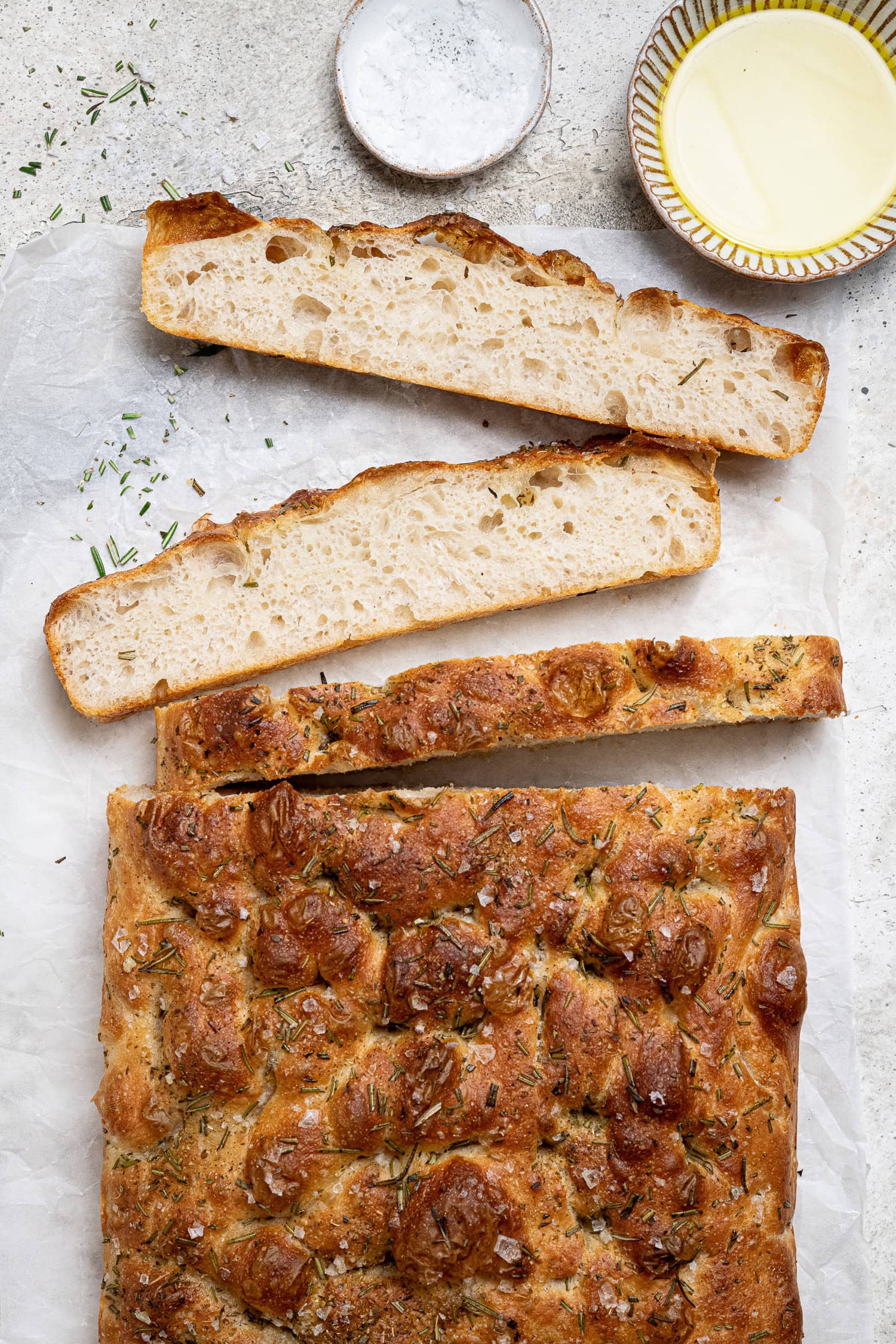
You only need a few ingredients to make this incredible, soft, chewy, bubbly, herby focaccia bread! It is made using the stretch and fold method so there is no kneading and very little hands-on time required!
This focaccia is the perfect accompaniment to dips, soups and stews, but it's so good that you could happily just eat it on it's own!

Focaccia is one of my absolute favourite breads to make, it is relatively low effort for very high reward and it is such a versatile, flavourful bread.
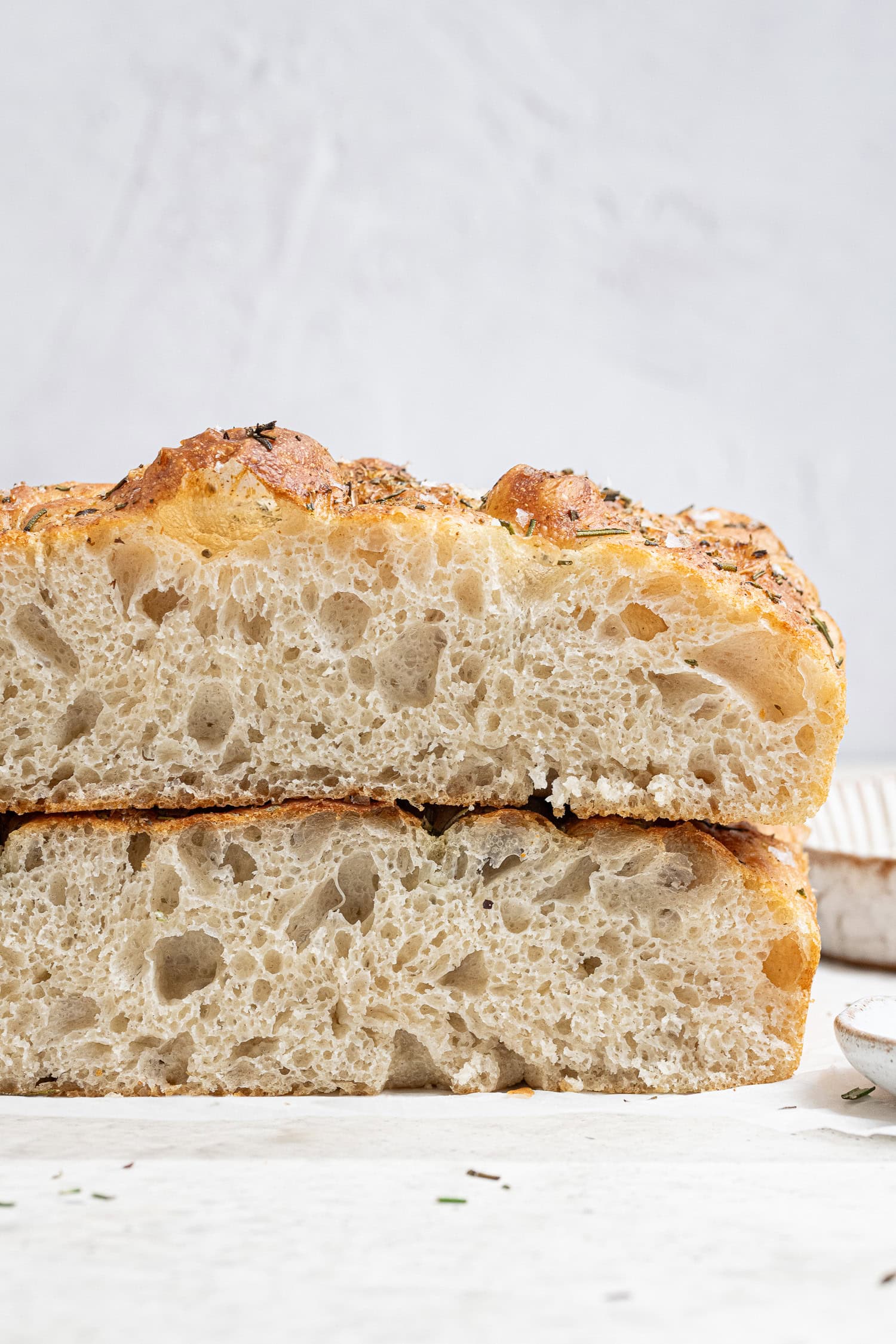
This easy bubbly focaccia is the bread recipe that I make most often, it is easy to make and has an incredible soft, light, bubbly texture with a crisp, almost fried bread exterior. I often make a double batch and freeze it in portions so that I always have some on hand to serve with soup.
I make it using the stretch and fold technique which is very easy to do, and doesn't involve kneading the dough.
What Is The Stretch And Fold Technique?:
Stretch and fold is a technique to develop the gluten and strengthen the dough without kneading it. As this is a very high-hydration dough it is very wet and sticky and would therefore be difficult and very messy to knead. As the stretch and folds are performed in the bowl it is a much easier and less messy method for developing wet doughs.
In this method, the dough is stirred together until it is mixed, but it is not kneaded. Instead, you cover the bowl and let it rest for 15 minutes then perform the first set of stretch and folds - wet your hands then pick up a side of the dough, lift it to stretch it, and fold it over the top. Repeat this, turning the bowl as you go, until you have performed about 8-12 stretch and folds.
Cover the bowl and let it rest for 15 minutes then repeat the stretching and folding. Do this for a total of 5 times, resting the dough for 15 minutes in between each. You should start to feel the dough become stronger and more resistant to stretching.
This process only involves a couple of minutes of hands-on time and very little mess.
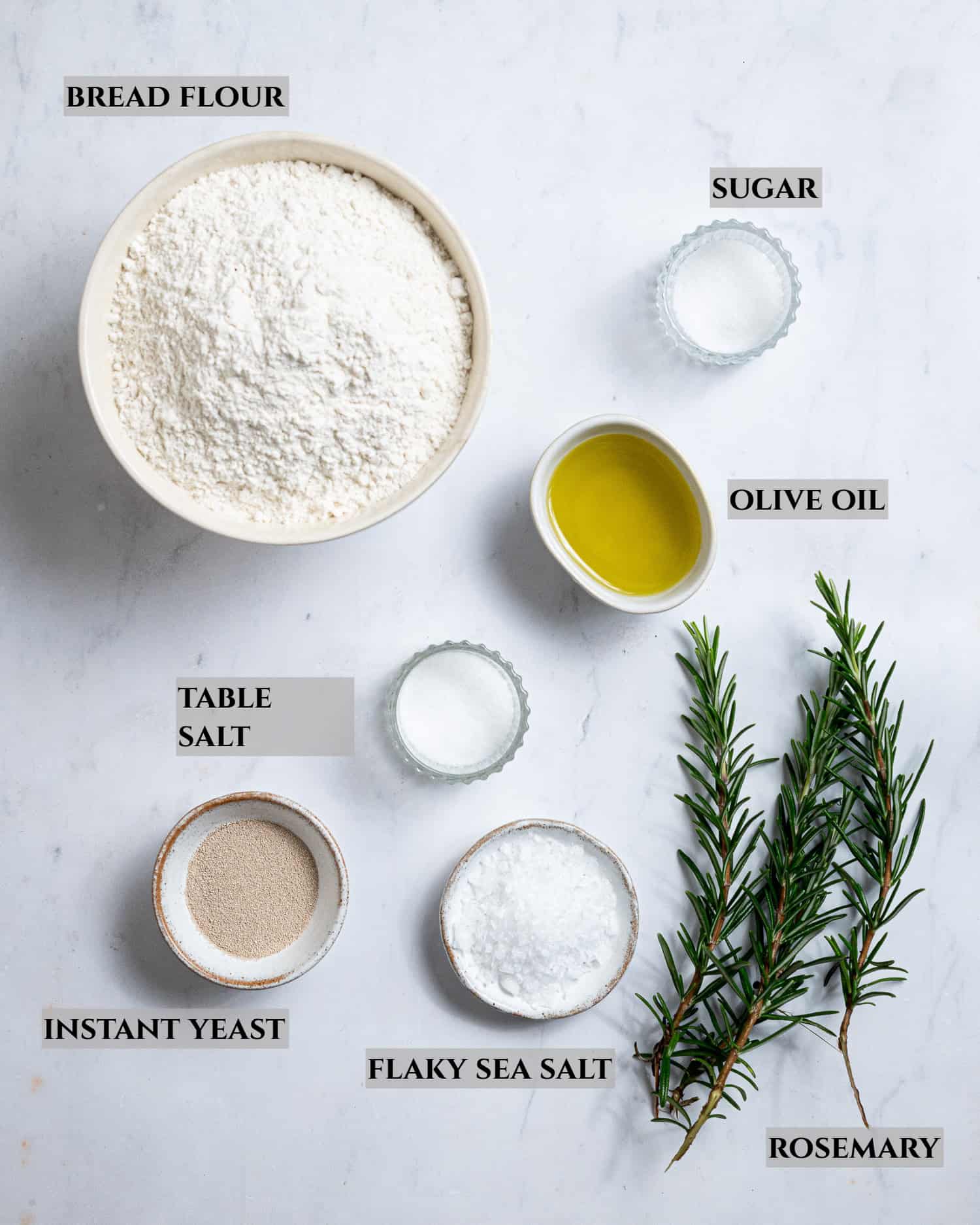
Ingredient Details:
Bread flour: You need to use white bread flour (called strong white bread flour in the UK). Plain/all-purpose flour has too low a protein content and won't give you the right texture. Do not use gluten-free flour or wholemeal flour.
Yeast: I always prefer to use instant yeast when making bread as it can just be added straight to the flour and doesn’t need to be activated first. See below for instructions if you only have active dry yeast.
Olive oil: Use a good quality olive oil for the best flavour, I use extra virgin in both the dough and to drizzle on top.
Salt: Salt is important in bread making for the flavour, colour and crust. I use fine sea salt or table salt in the dough, then sprinkle the focaccia with flaky sea salt just before baking. The extra sprinkle of salt is optional, the salt in the dough is not.
Rosemary: I like to keep things simple and just top my focaccia with some chopped fresh rosemary. Thyme also works well, and if I don't have any fresh herbs then I often just use dried oregano.
Sugar: I add just a tiny bit of sugar to give the yeast a kick start, this can safely be omitted.
How To Make Easy Bubbly Focaccia:
(Full measurements and instructions can be found in the recipe card at the bottom of the page)
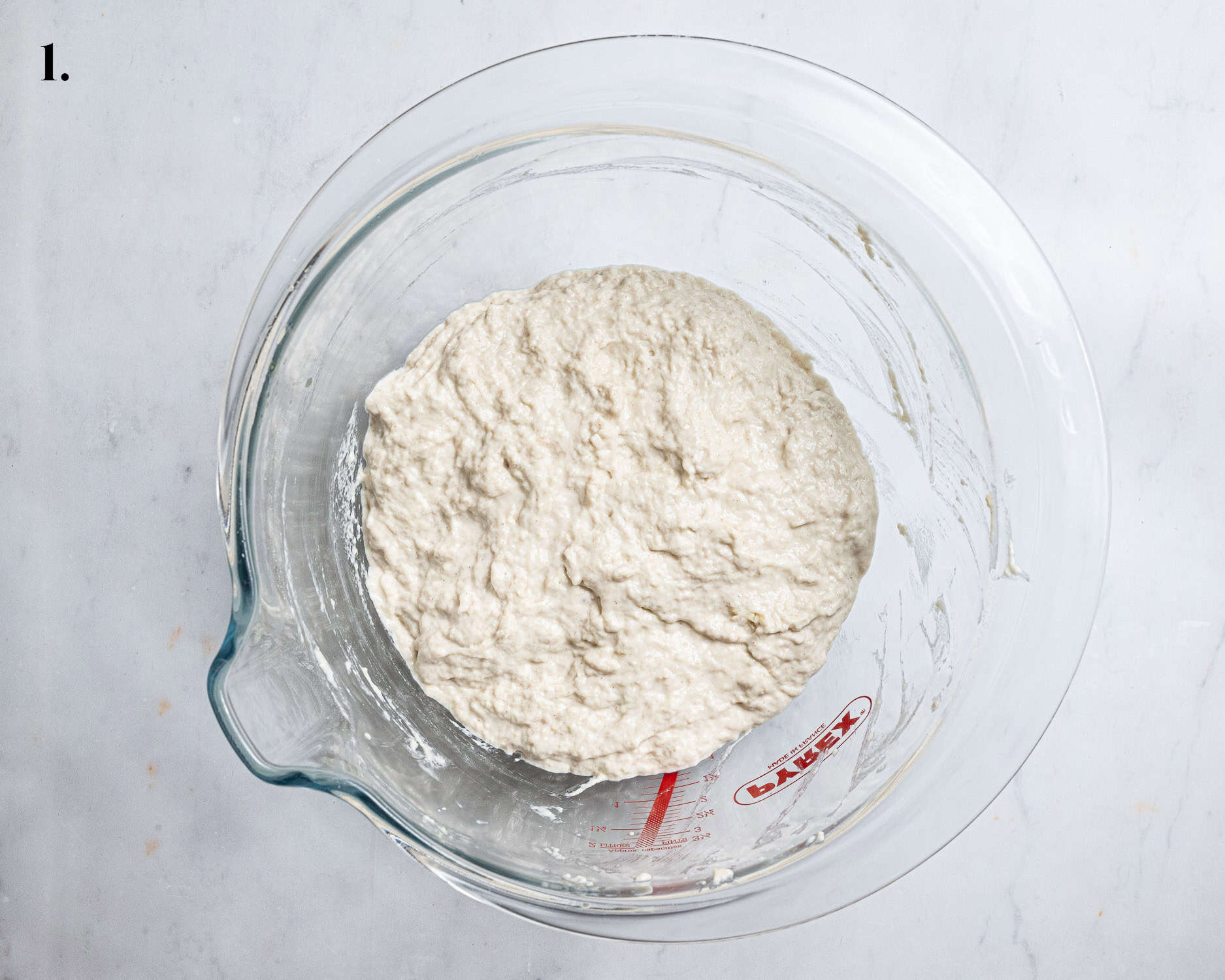
- Step 1: Mix together the yeast, salt, sugar and bread flour then stir in the olive oil and water to make a sticky dough. Cover and leave to rest for 15 minutes.
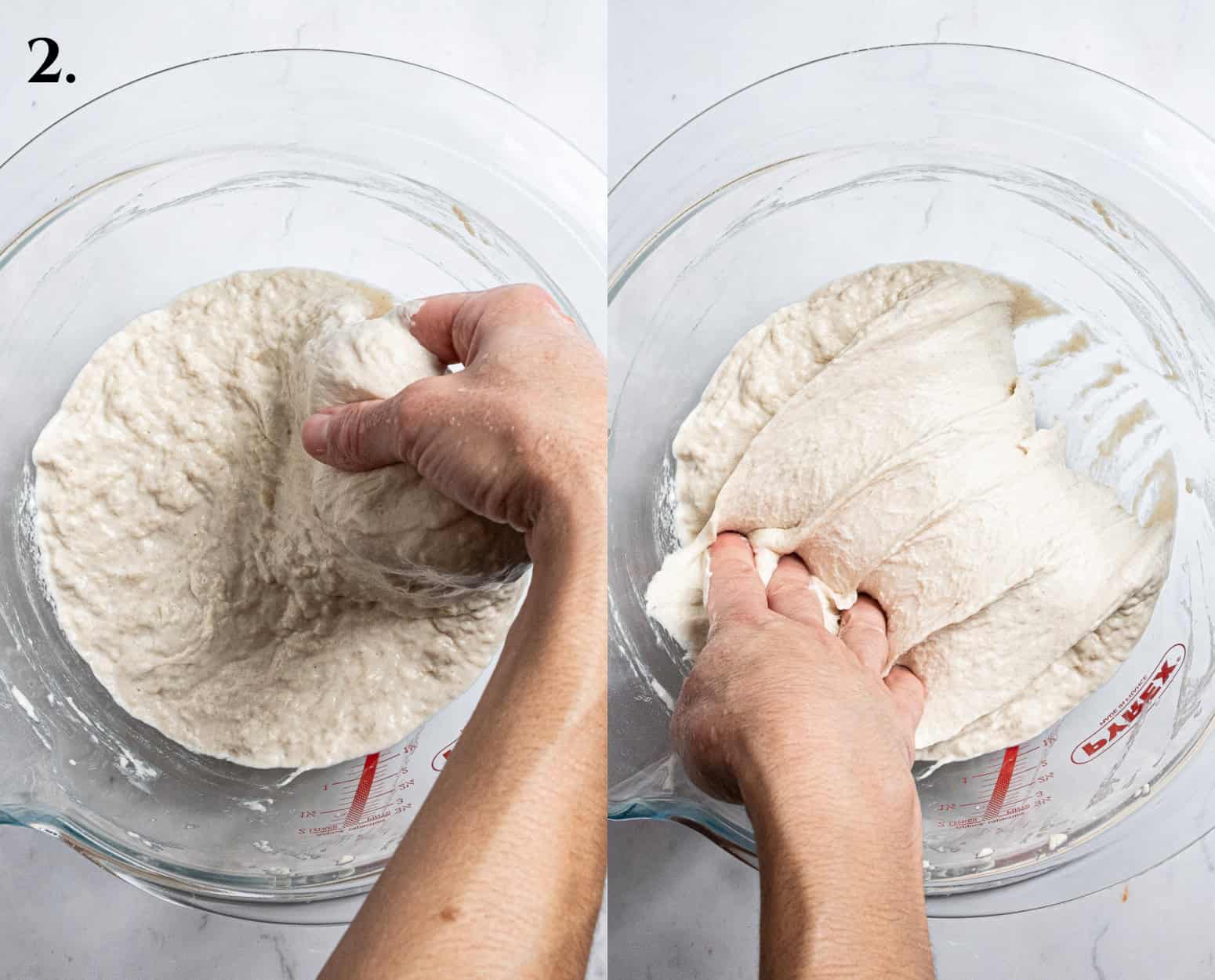
- Step 2: Perform the first set of stretch and folds - wet your hands and pick up a side of the dough, stretch it, and fold it over the top. Repeat this, turning the bowl as you go, until you have performed about 8-12 stretch and folds. Cover and let rest for 15 minutes.
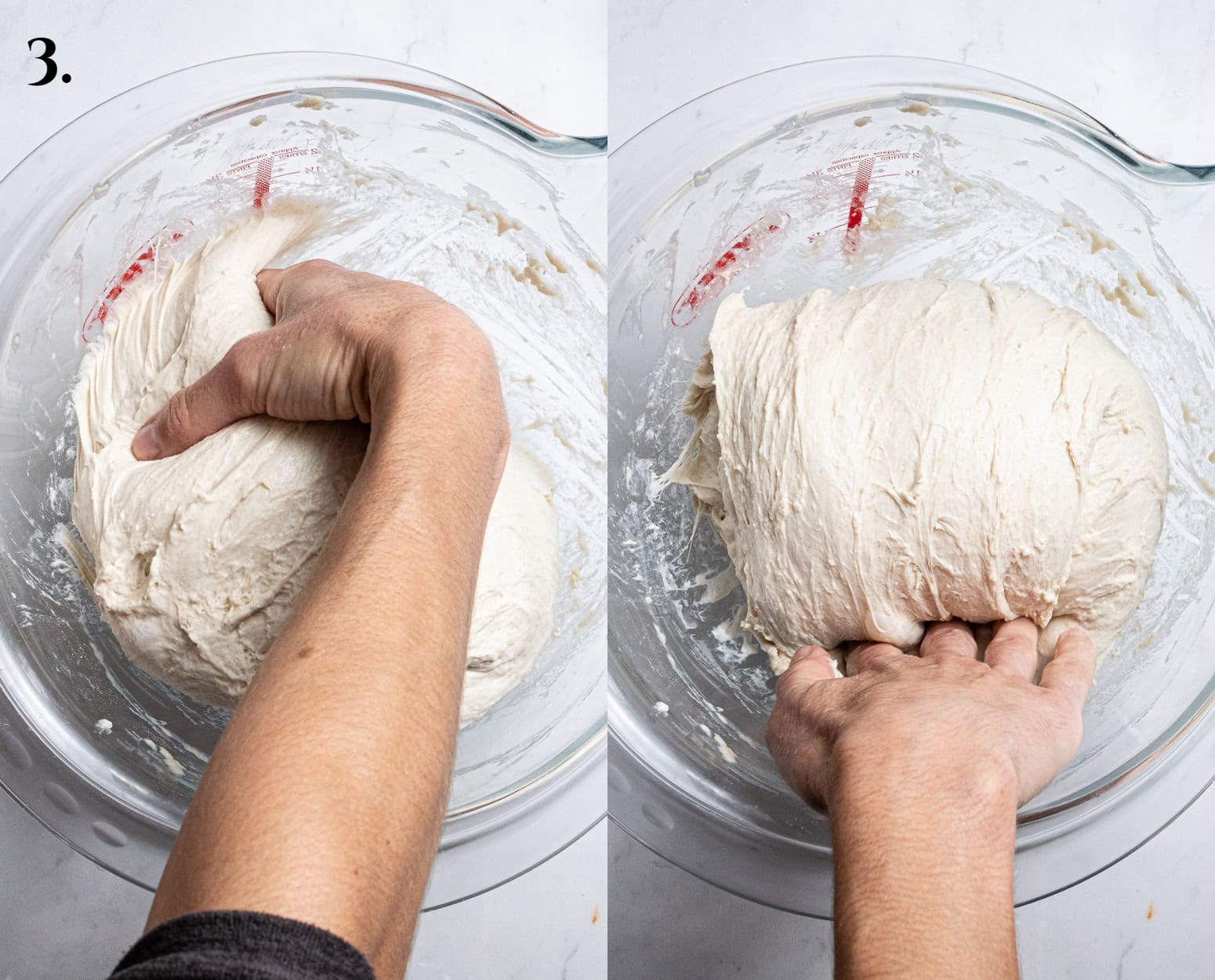
- Step 3: Repeat the stretching and folding process 4 more times, letting the dough rest for 15 minutes in between each.
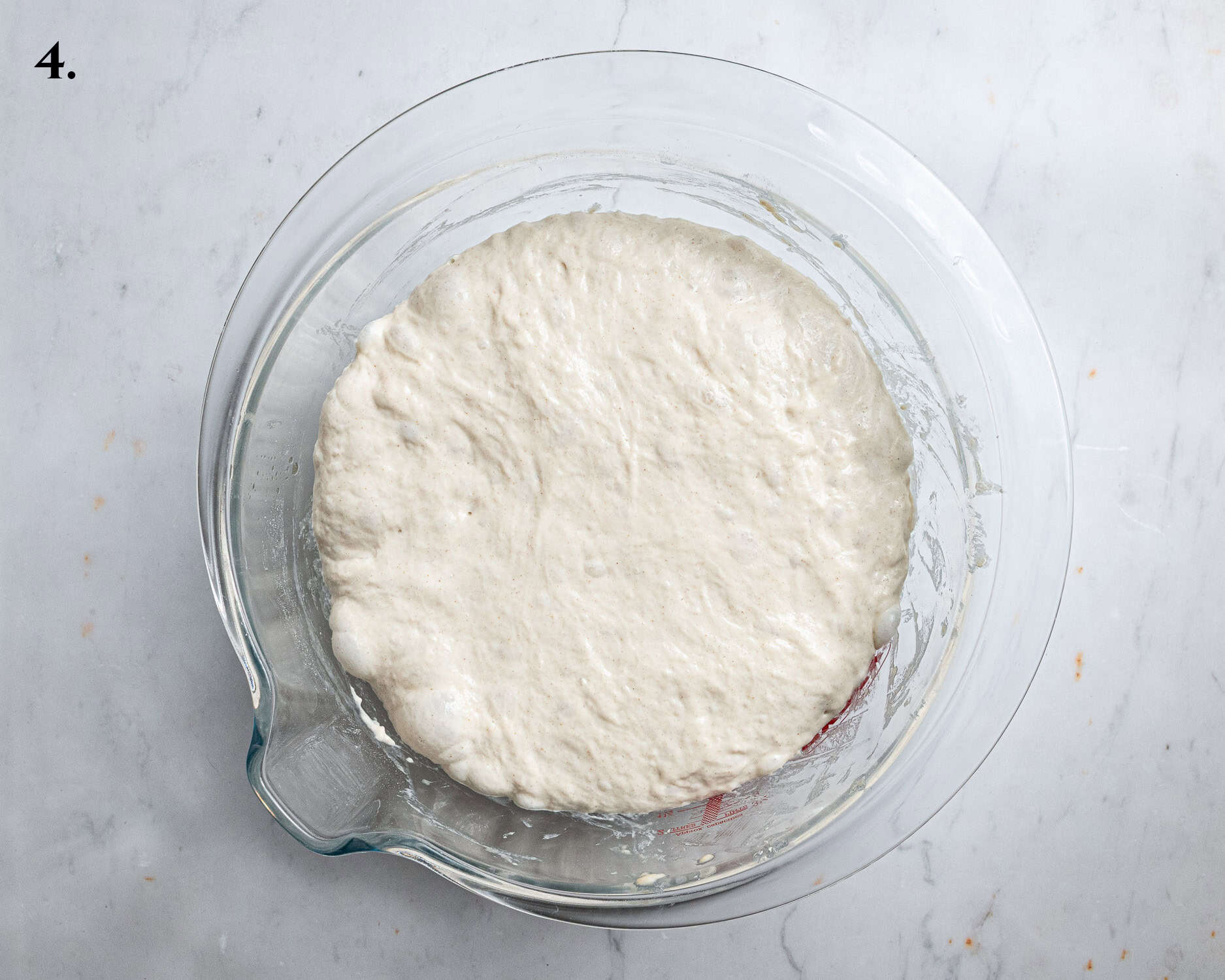
- Step 4: Once you have done a total of 5 rounds of stretch and folds, cover the bowl and leave the dough to rise until doubled in size.
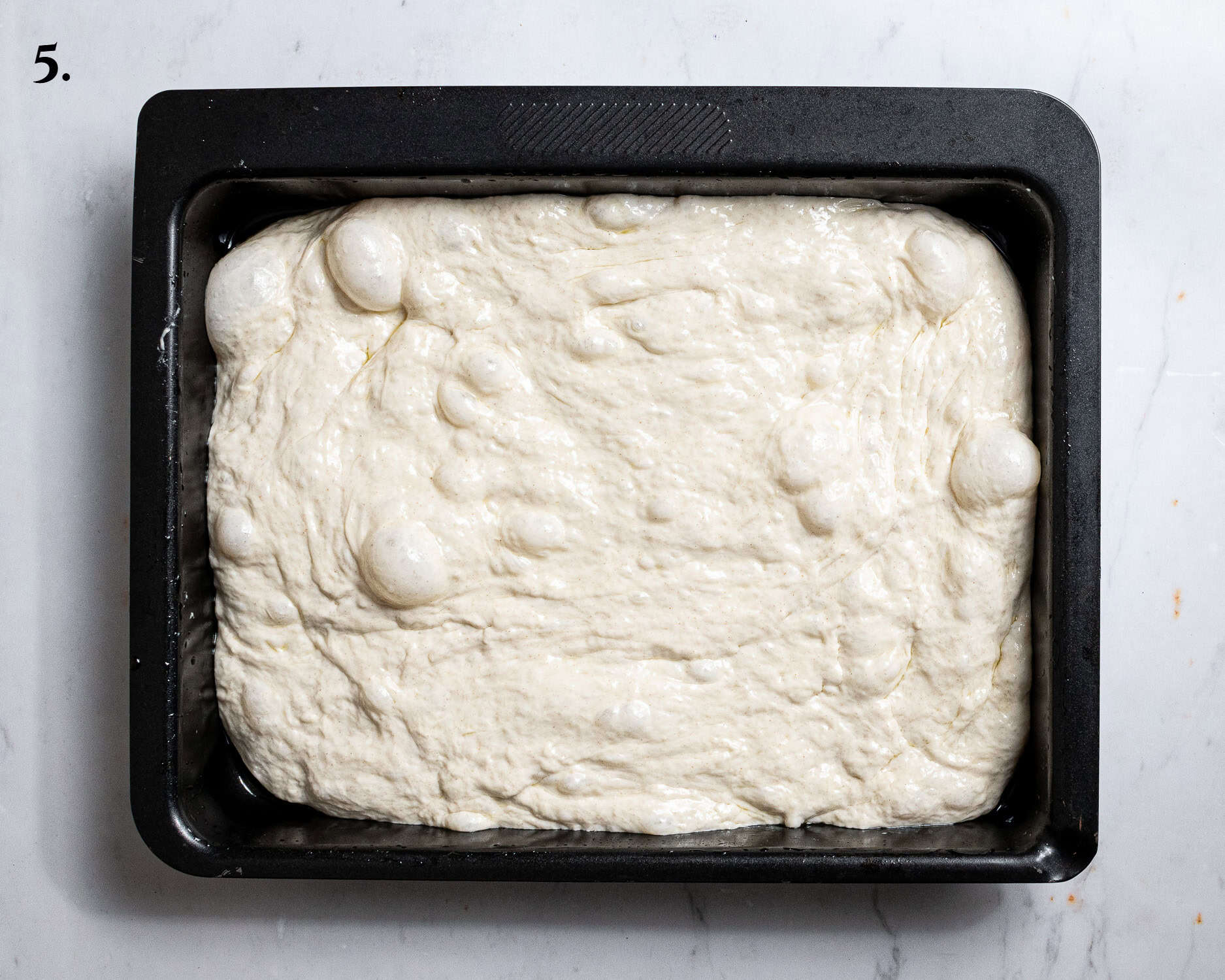
- Step 5: Oil a baking tray and scrape the dough out onto it. Oil your hands and stretch the dough out to almost fill the tray.
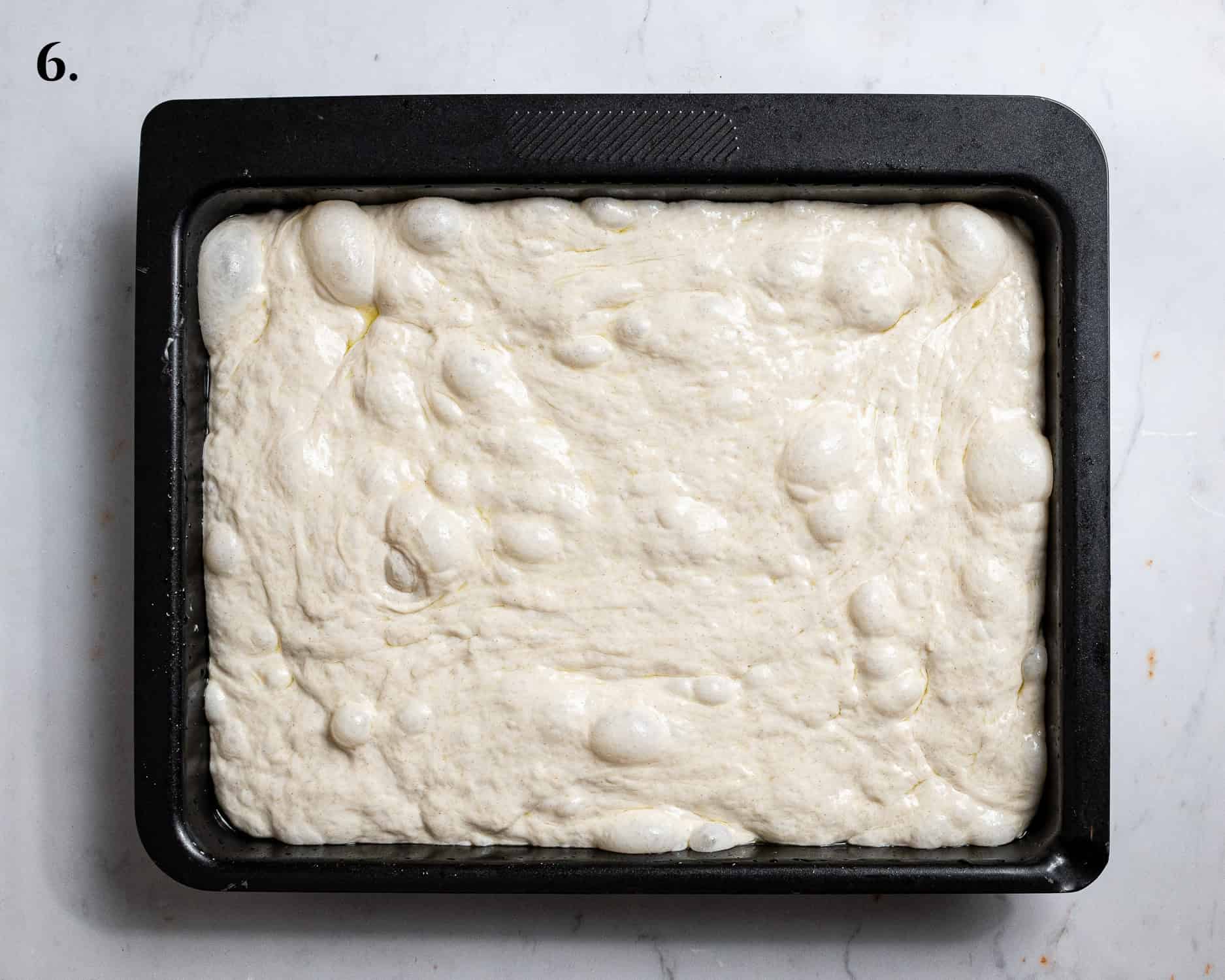
- Step 6: Cover and leave to rise until the dough has spread and is really bubbly and jiggly.
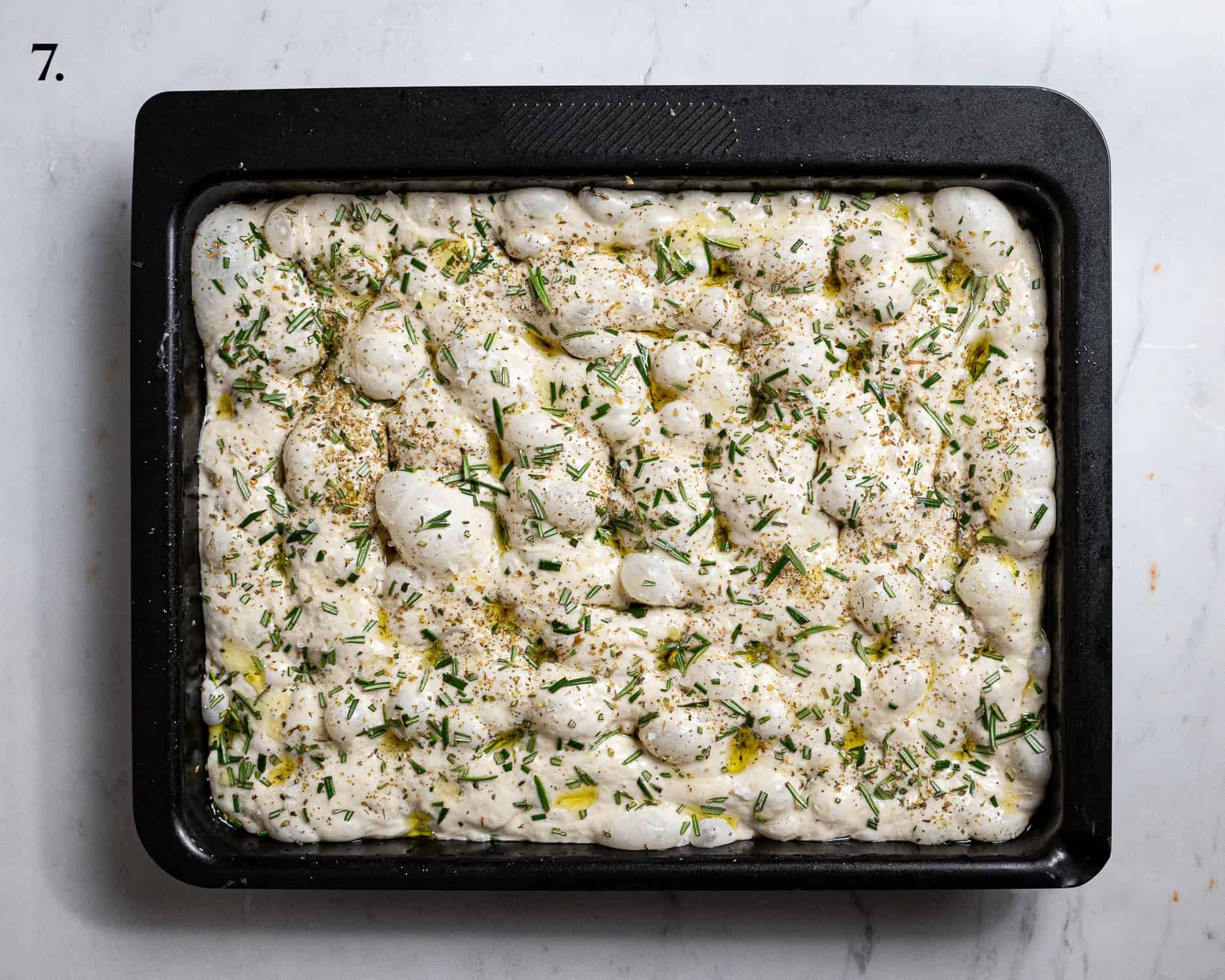
- Step 7: Scatter the dough with chopped fresh herbs. Oil your hands then prod the dough at regular intervals with your fingers, pushing all the way through to the bottom to create dimples. Drizzle with olive oil, letting it pool in the dimples and sprinkle with flaky sea salt.
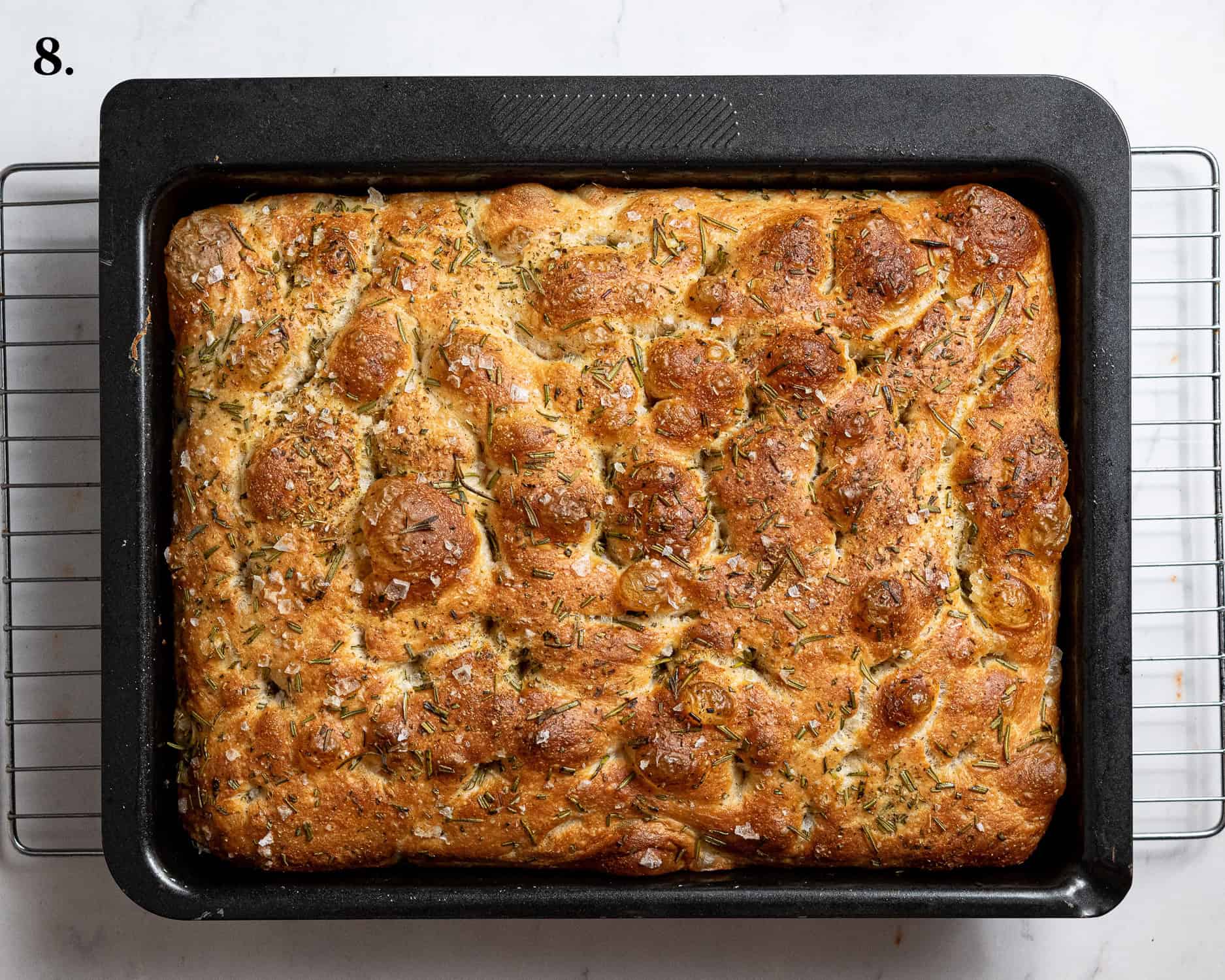
- Step 8: Bake for 20-25 minutes until nicely browned and crisp.
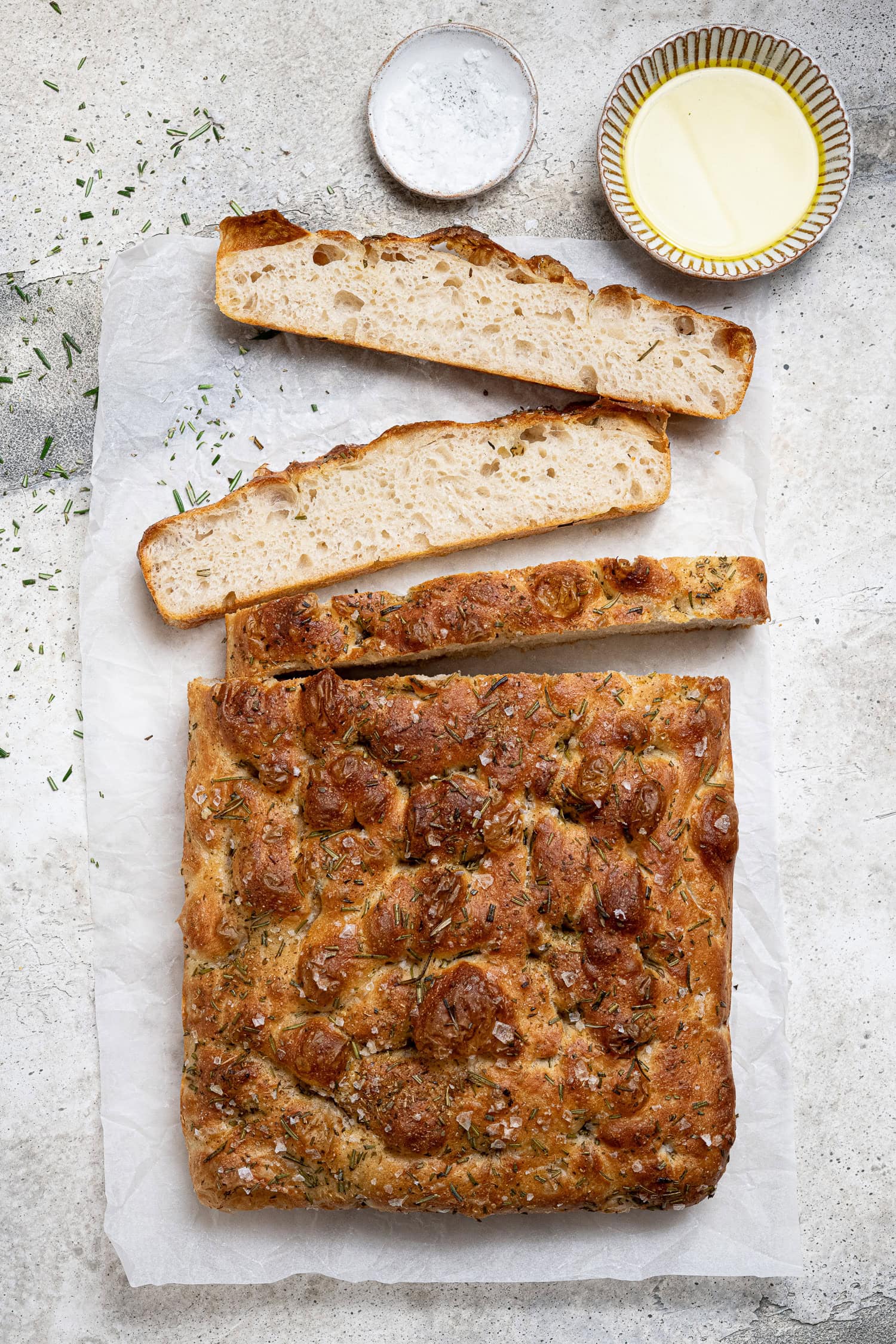
Top Tips:
For the best results make sure that you follow the recipe closely. As always, I highly recommend using the gram measurements (with a digital scale), rather than the cup conversions. Cup measurements are simply not accurate enough for baking and I cannot guarantee the best results if you use them.
Focaccia dough should be quite wet and sticky; this in combination with a hot oven is what creates the chewy, holey structure. Don’t be tempted to add more flour!
Make sure that your yeast isn’t out of date! Old yeast can lead to bread that doesn’t rise.
Always wet your hand before performing the stretch and folds to help prevent the dough from sticking to you.
The rising time of the dough will vary depending on how warm it is; on hot days it will rise much faster than on cold ones.
You can vary the toppings to suit you. I like to keep it simple with just some chopped herbs, but you could use caramelised onions, thin slices of roasted pumpkin, olives, tomatoes, sliced garlic cloves, pumpkin seeds or vegan cheese.
FAQ's:
Unfortunately focaccia goes stale quite quickly so I don’t recommend making it in advance, it ideally needs to be eaten on the day it is baked. It will still be good for the next day or two, but will benefit from being warmed through in a low oven before serving to refresh it.
Yes, make sure the loaf has cooled completely first and freeze it on the day it is baked to preserve freshness. Freeze in a sealed freezer bag, either whole or in slices.
I always use instant yeast (also called easy bake yeast) when I am baking bread as it doesn’t need to be activated in liquid first, you can just add it straight to the flour. I highly recommend buying instant yeast if possible.
If you are only able to get active dry yeast then you can still use it but the method will be a little different. Use 10g (3 tsp) of active dry yeast and stir it into the lukewarm water. Let it sit for 10-20 minutes until it has become bubbly then add the rest of the ingredients and proceed with the rest of the recipe as written.
No, I’m afraid that you cannot use gluten free flour. Making gluten free bread is tricky and the entire recipe would need reworking. Gluten free baking is not my area of expertise so I cannot advise you. It is best to use a recipe that is designed to be gluten free rather than trying to adapt a non gluten free recipe.
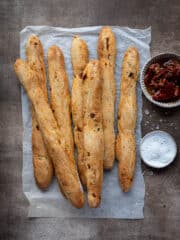
This focaccia is the perfect accompaniment to any kind of soup or dip. Or slice it in half widthways and use it to make sandwiches.




If you love this recipe, please leave a 5-star ★★★★★ rating at the bottom of the page! This provides helpful feedback to both me and other readers.
Also be sure to add us as a trusted site on Google so that our recipes show up more in your searches!
To keep up to date with all my latest recipes you can subscribe to my newsletter and follow along on social media!
All images and content on Domestic Gothess are copyright protected. If you want to share this recipe then please do so by using the share buttons provided. Do not screenshot or post the recipe or content in full, instead include a link to this post for the recipe.
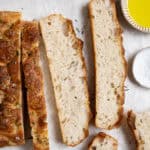
Easy Bubbly Focaccia
Ingredients
Dough:
- 500 g (4 ¼ cups) white bread flour
- 8 g (2 ½ teaspoons) instant/fast action yeast
- 10 g (1 ½ teaspoons) fine table salt
- 1 teaspoon caster or granulated sugar
- 27 g (2 Tablespoons) extra virgin olive oil
- 425 g (1 + ¾ cups) lukewarm water
Topping:
- about 2 Tablespoons chopped fresh rosemary
- 1-2 teaspoons dried oregano
- extra virgin olive oil for drizzling
- flaky sea salt
Instructions
- Mix together the yeast, salt, sugar and bread flour then stir in the olive oil and water to make a well combined, sticky dough. Cover and leave to rest for 15 minutes.500 g (4 ¼ cups) white bread flour, 8 g (2 ½ teaspoons) instant/fast action yeast, 10 g (1 ½ teaspoons) fine table salt, 1 teaspoon caster or granulated sugar, 27 g (2 Tablespoons) extra virgin olive oil, 425 g (1 + ¾ cups) lukewarm water
- Perform the first set of stretch and folds - wet your hands and scoop up a side of the dough, lift it up to stretch it, fold it over the top and press it into the dough on the opposite side of the bowl. Repeat this, turning the bowl as you go, until you have performed about 8-12 stretch and folds. Cover and let rest for 15 minutes.
- Repeat the stretching and folding process 4 more times, covering the bowl and letting the dough rest for 15 minutes in between each.
- Once you have completed a total of 5 rounds of stretch and folds, cover the bowl and leave the dough to rise until doubled in size and very puffy. This should take around 1 hour at warm room temperature but could take about 1 ½ hours if it is cold out.
- Line a 23 x 33 cm/9 x 13 in baking pan with baking parchment and drizzle the base with about 1-2 Tablespoons of olive oil (you can skip the parchment if you have a very good non-stick pan).
- Gently scrape the risen dough into the pan. Oil your hands and gently stretch the dough out to almost fill the tray, it is ok if it doesn't quite reach the corners.
- Cover and leave to rise until the dough has spread, is really bubbly and jiggles if you shake the pan. This should take around 1 hour at warm room temperature.
- While the dough is rising, preheat the oven to 230℃/210℃ fan/450℉/gas mark 8.
- Once the dough is risen, scatter over the chopped rosemary and oregano. Oil your hands really well and starting at a short edge of the pan, press your fingertips into the dough until they reach the bottom of the pan, creating dimples. Repeat this process, working your way from one end to the other, spacing the dimples about 3-4 cm apart. You want to thoroughly dimple the dough without deflating it so be gentle yet decisive. If there are any large un-dimpled areas of the dough, add additional ones using one finger.about 2 Tablespoons chopped fresh rosemary, 1-2 teaspoons dried oregano
- Drizzle the dough with 1-2 Tablespoons of olive oil, leting it pool in the dimples, then sprinkle over some flaky sea salt.extra virgin olive oil for drizzling, flaky sea salt
- Bake for 20-25 minutes until nicely browned and crisp.
- Remove the focaccia from the oven, let it cool for a couple of minutes then carefully transfer it to a wire rack to cool completely; do not leave it to cool in the pan otherwise the bottom will become soggy.
Notes
- See post above for tips, details and step-by-step photos.
- For the best results make sure that you follow the recipe closely. As always, I highly recommend using the gram measurements (with a digital scale), rather than the cup conversions. Cup measurements are simply not accurate enough for baking and I cannot guarantee the best results if you use them.
- Always wet your hand before performing the stretch and folds to help prevent the dough from sticking to you.
If you tried this recipe let me know how it went! Rate it, leave a comment or tag @domestic_gothess on Instagram and hashtag it #domesticgothess

Gordon
An easy and satisfying tecipe. The intention was to eat half and freeze half of the loaf... none of it found its way to the freezer!