

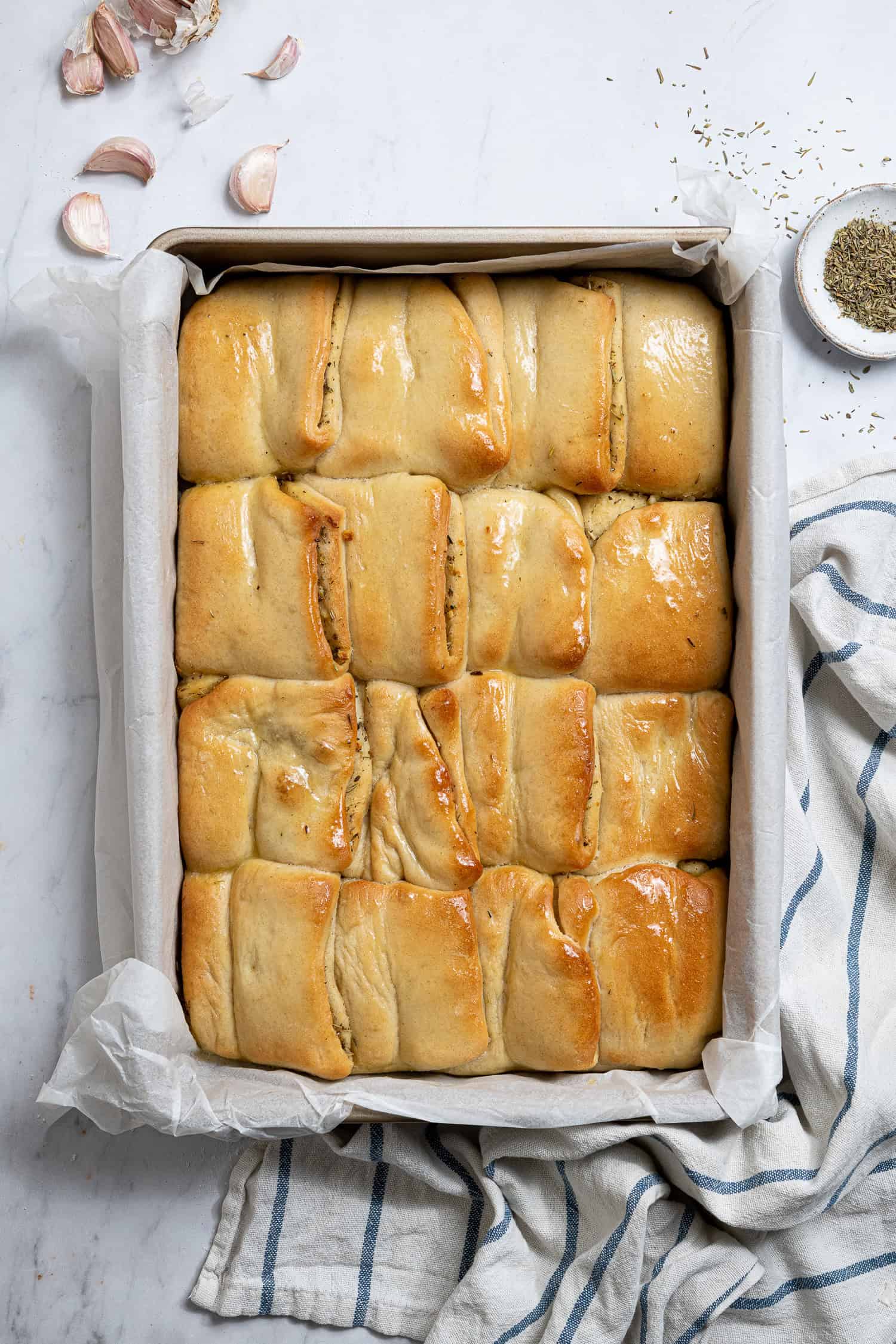
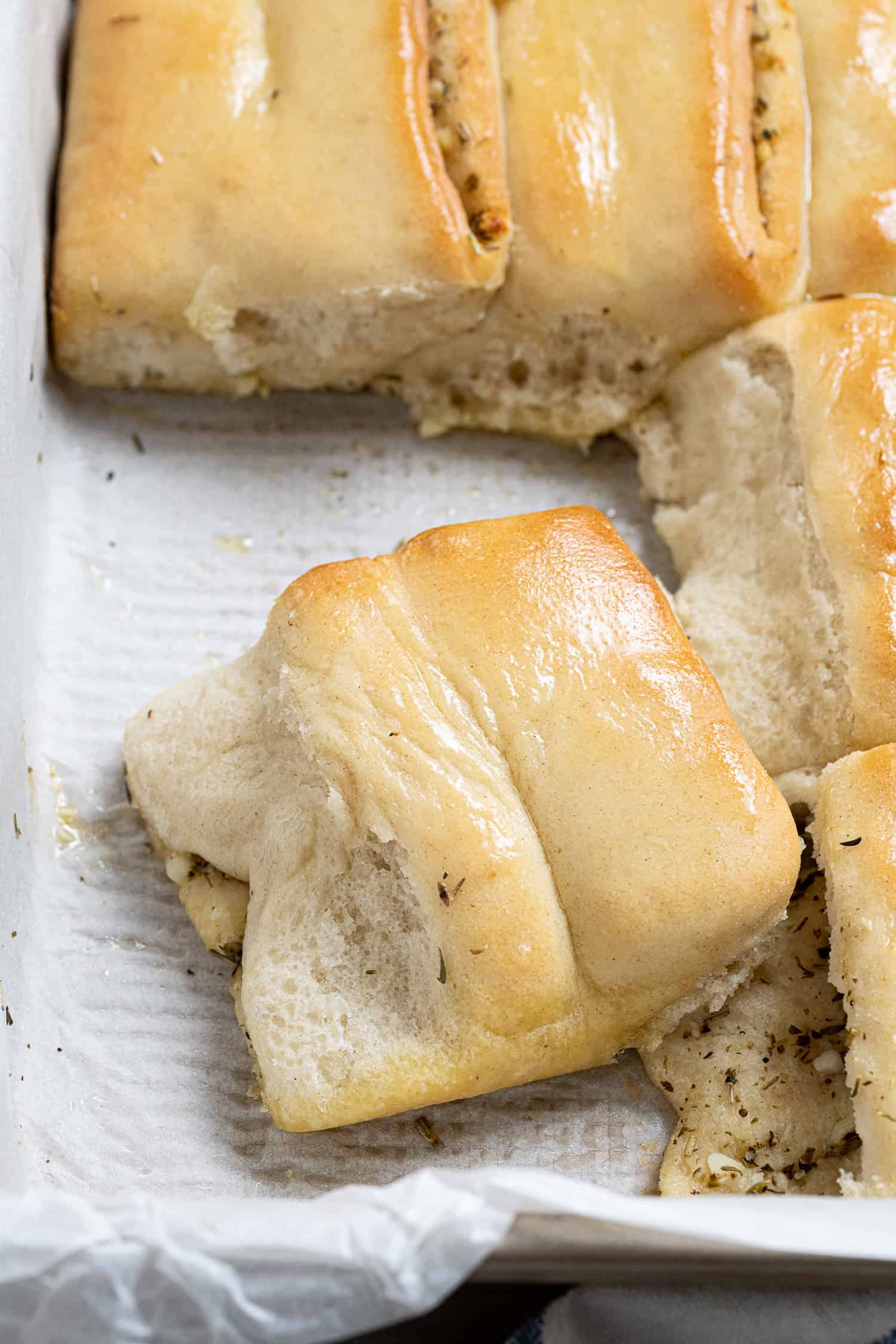
These tender, buttery, garlic Parker House rolls are the perfect dinner roll! They are pillowy soft and pull apart to reveal a herby garlic butter centre. They are also so incredibly easy to make and infinitely better than store bought bread. Whether you are serving them alongside soup, pasta, or for Thanksgiving they are sure to elevate any meal!

What Are Parker House Rolls?
Parker House rolls are a type of American dinner roll, famous for their buttery, slightly sweet flavor, pillowy texture, and a distinctive folded shape that makes them easy to pull apart.
They were invented at the Parker House Hotel in Boston during the late 19th century. Legend has it that a disgruntled pastry chef threw a batch of unfinished dough into the oven, resulting in the folded-over appearance. Whether it was a mistake or a stroke of genius, the rolls became so popular they became a staple of the hotel (where they are still served today).
This garlic herb version is a twist on the classic, and the garlic bread dinner roll hybrid is utterly addictive; though you can of course use this recipe to make traditional vegan Parker House rolls sans garlic if you prefer.
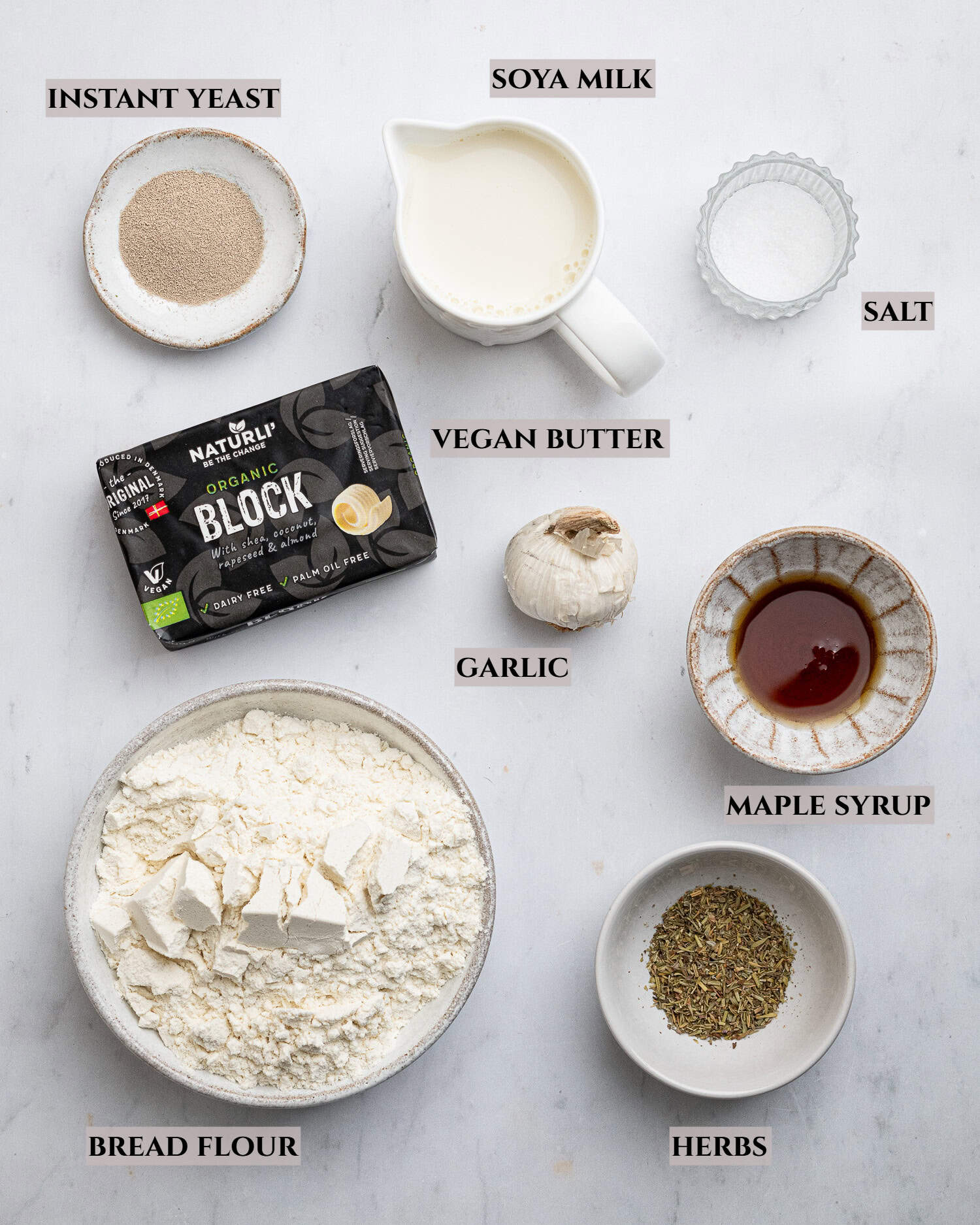
Ingredient Details:
Bread flour: White bread flour helps to give these garlic Parker House rolls their soft, fluffy, chewy texture. Plain (all-purpose) flour will also work though the texture isn’t quite the same. I don’t recommend using wholemeal flour as that will make the bread too dense.
Instant yeast: I always prefer to use instant yeast when making bread as it can just be added straight to the flour and doesn’t need to be activated first.
Salt: You simply cannot make good bread without salt. Don’t omit it.
Non-dairy milk: Soy milk is always my favourite for baking as it has the highest protein content so most closely resembles dairy milk. Any variety of non-dairy milk will work however, but go for an unsweetened one if you can, and definitely soy milk if you have it.
Vegan butter: A block style butter such as Flora plant butter or Naturli vegan block really is best. A spreadable one will work but your dough may be softer and therefore harder to work with.
Garlic: make sure to use fresh garlic for the best flavour.
Herbs: I used mixed dried herbs but you could swap this for a couple of handfuls of finely chopped fresh herbs such as parsley, rosemary and thyme.
Maple syrup: Adds a touch of sweetness to the dough. You can use sugar instead.
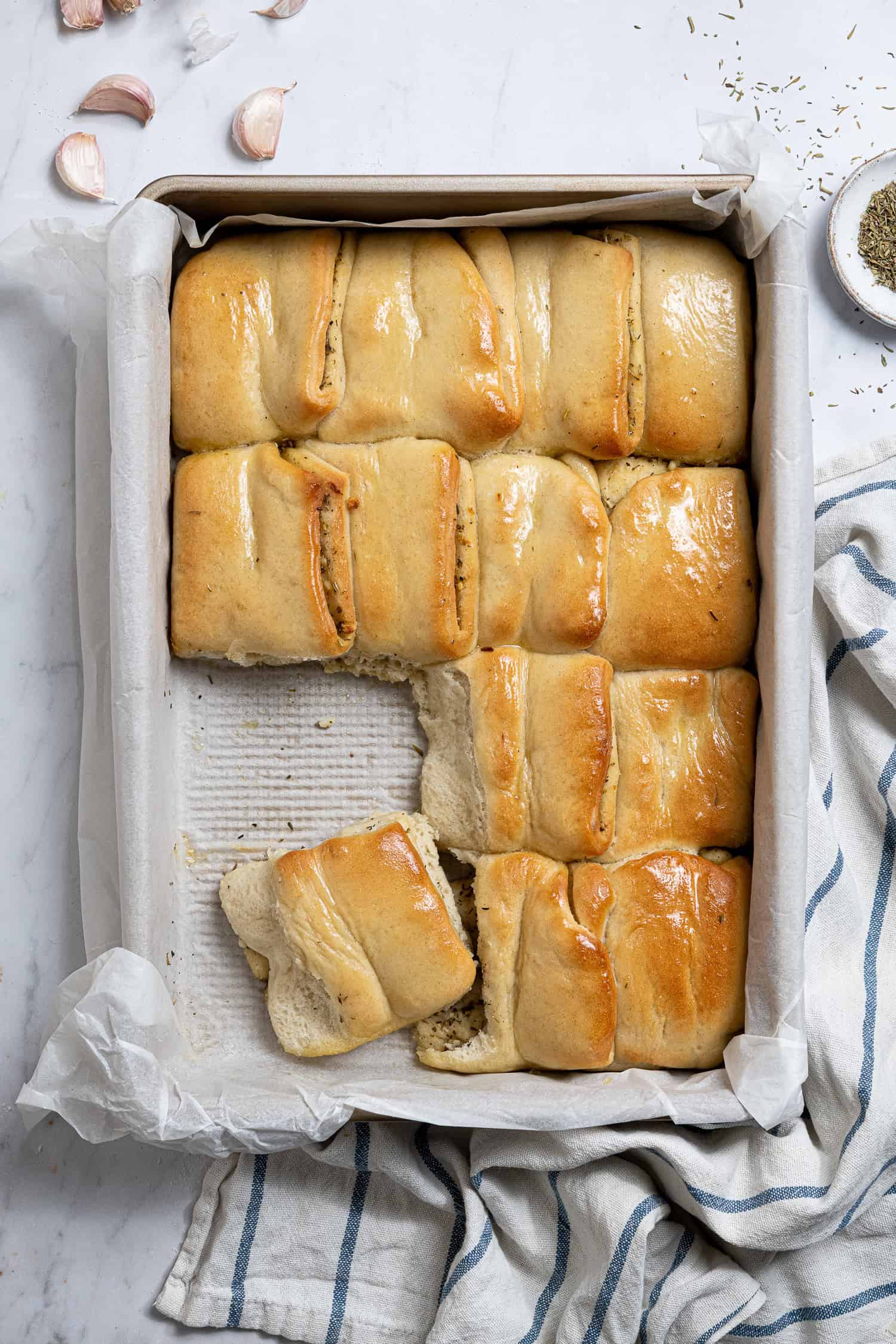
How To Make Garlic Parker House Rolls:
(Full measurements and instructions can be found in the recipe card at the bottom of the page)

- Step 1: To make the dough, mix the bread flour, yeast and salt in a large bowl. Add the milk, water and maple syrup and mix to form a shaggy dough.
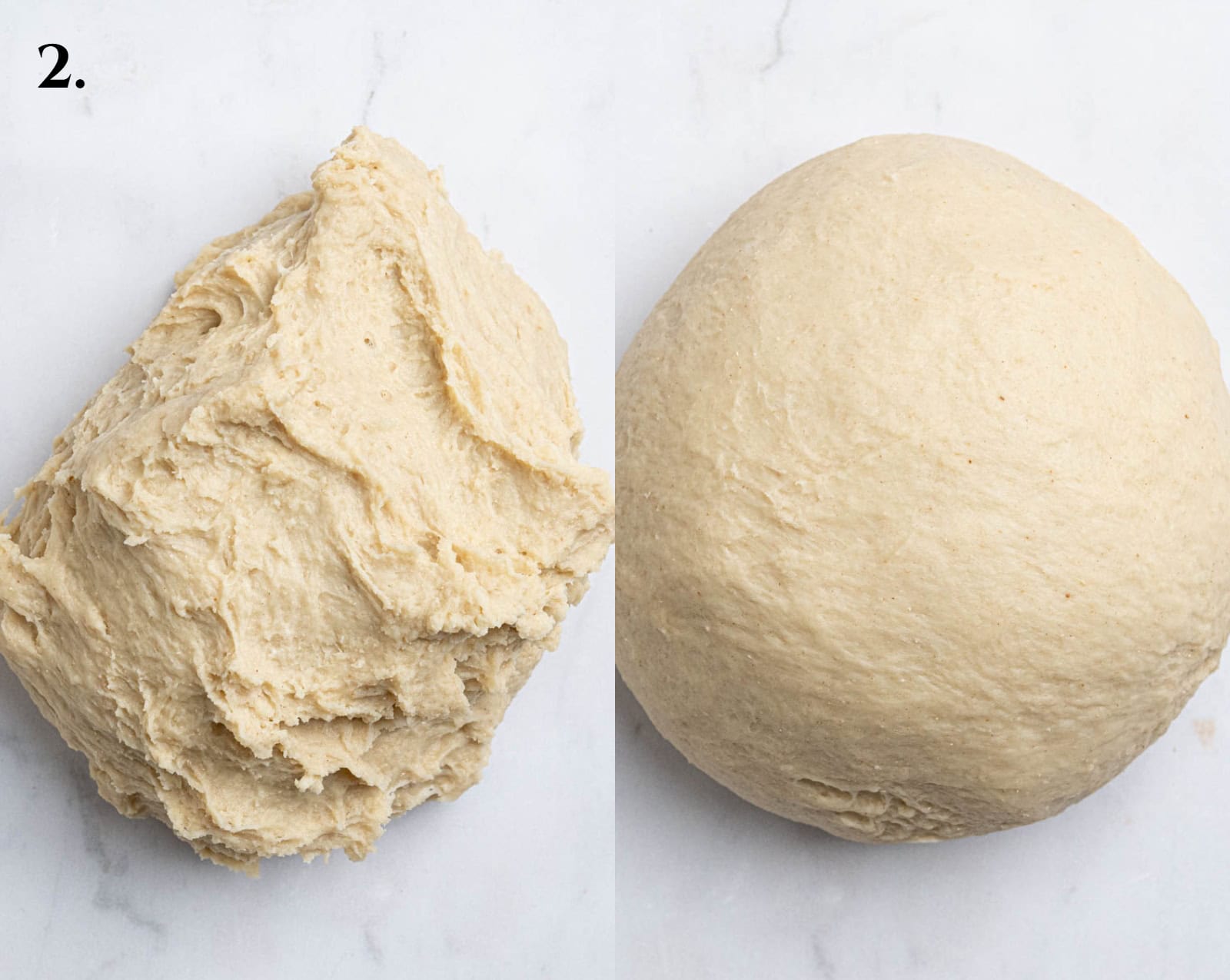
- Step 2: Knead for 5-10 minutes until smooth and elastic. The dough will be sticky at first.
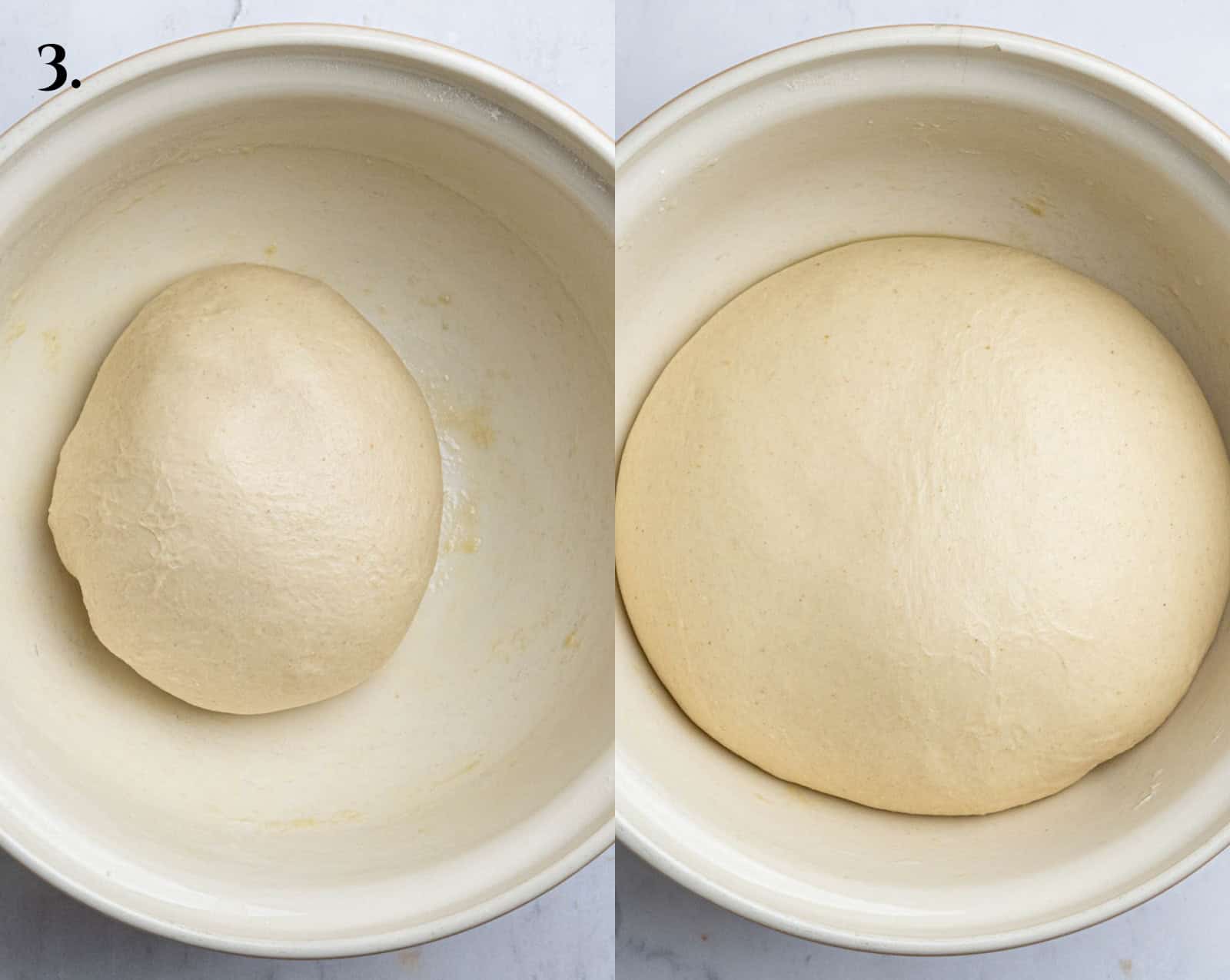
- Step 3: Knead in the butter then place in an oiled bowl, cover and let rise until doubled.
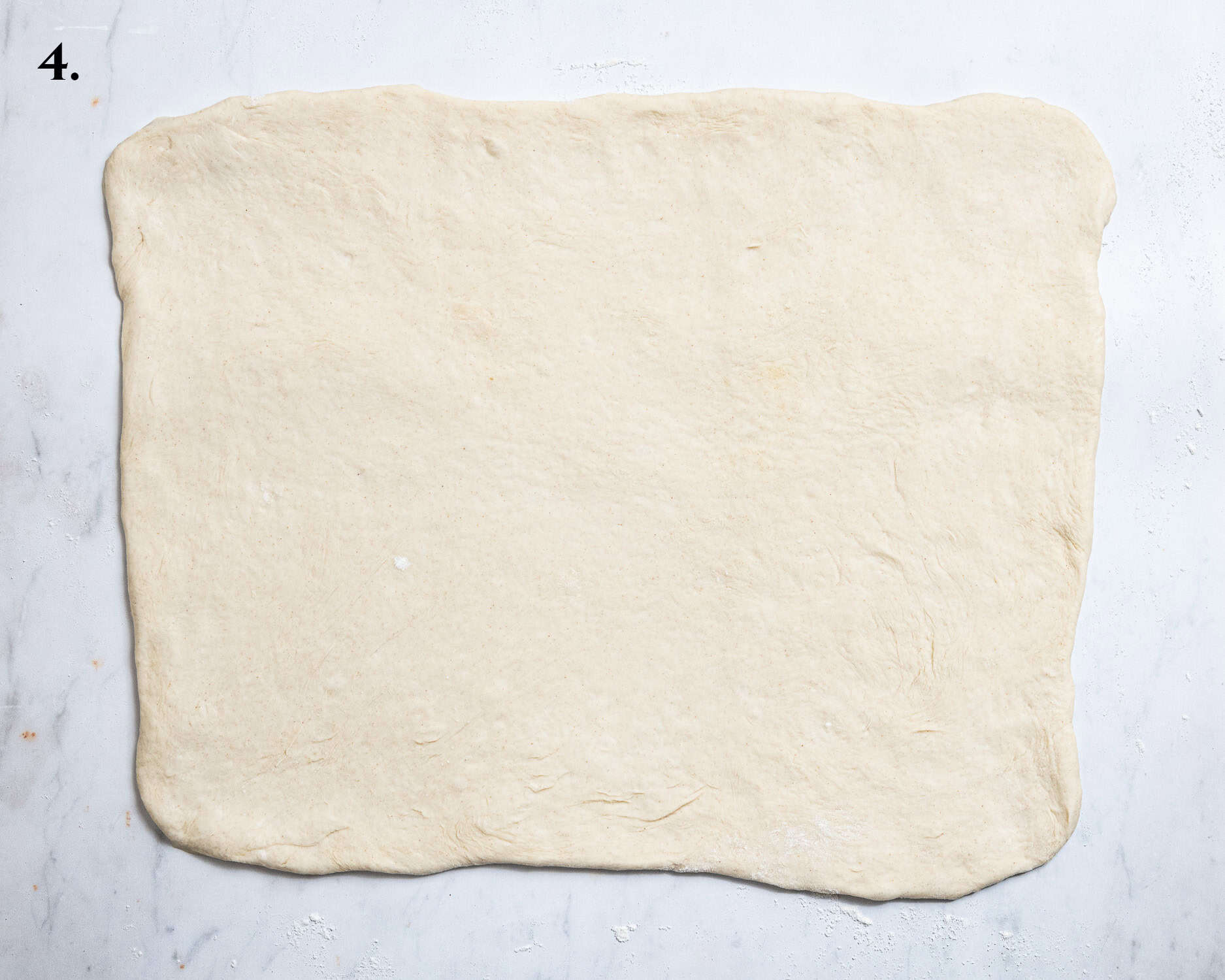
- Step 4: Punch down the risen dough and divide in half. Roll one half out on a lightly floured surface into a rectangle.
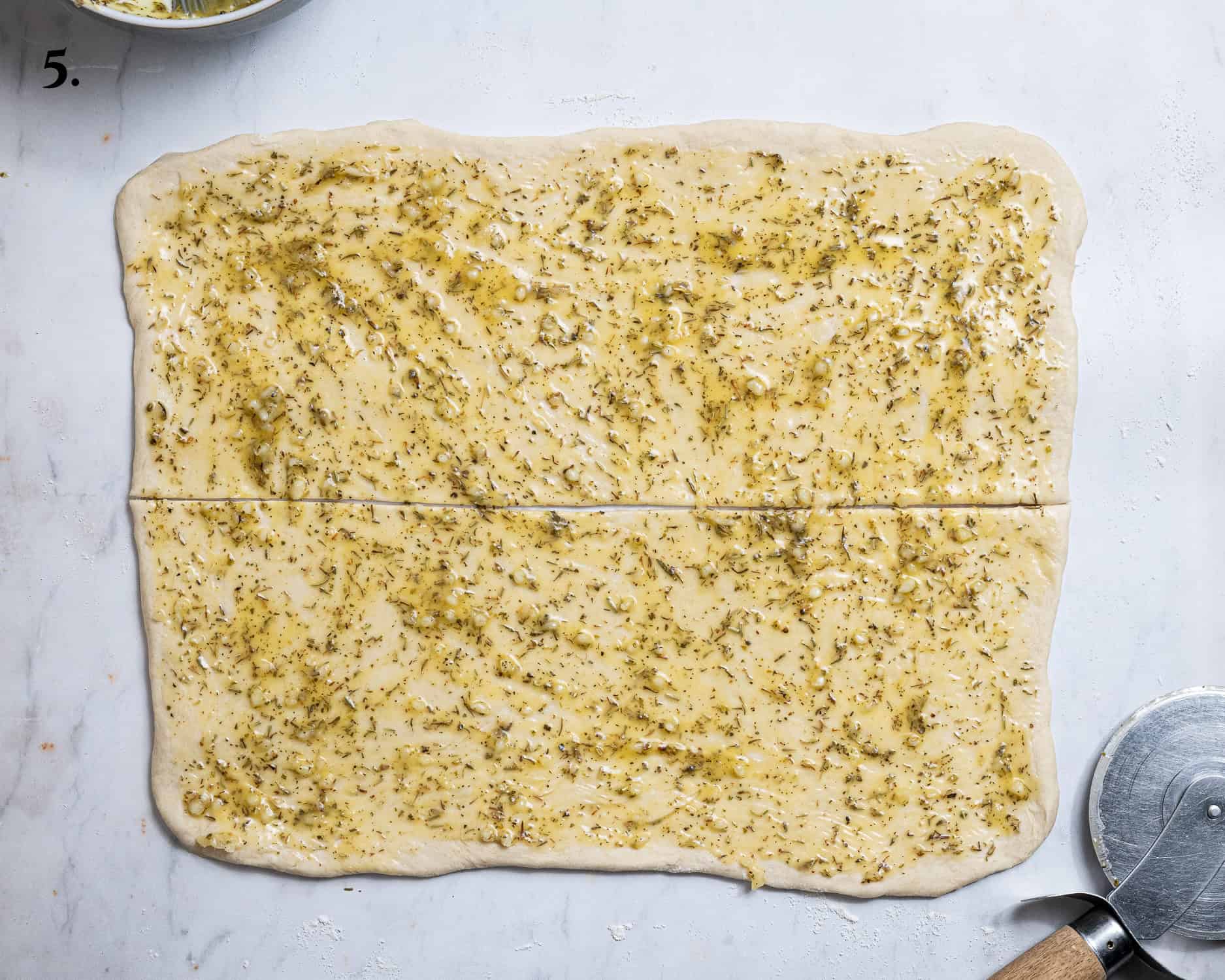
- Step 5: Brush all over with garlic butter then slice in half lengthways.
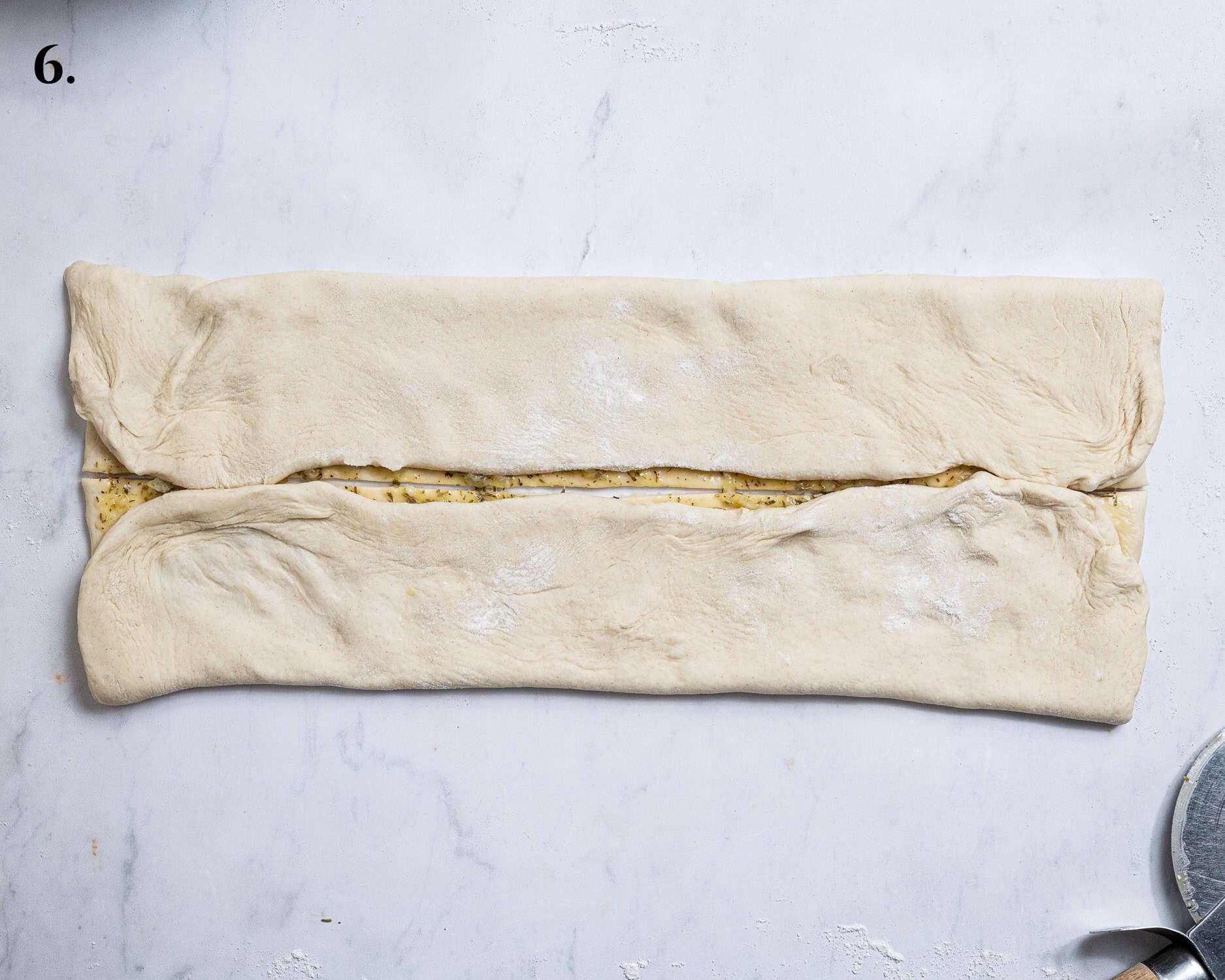
- Step 6: Fold each half in half lengthways.
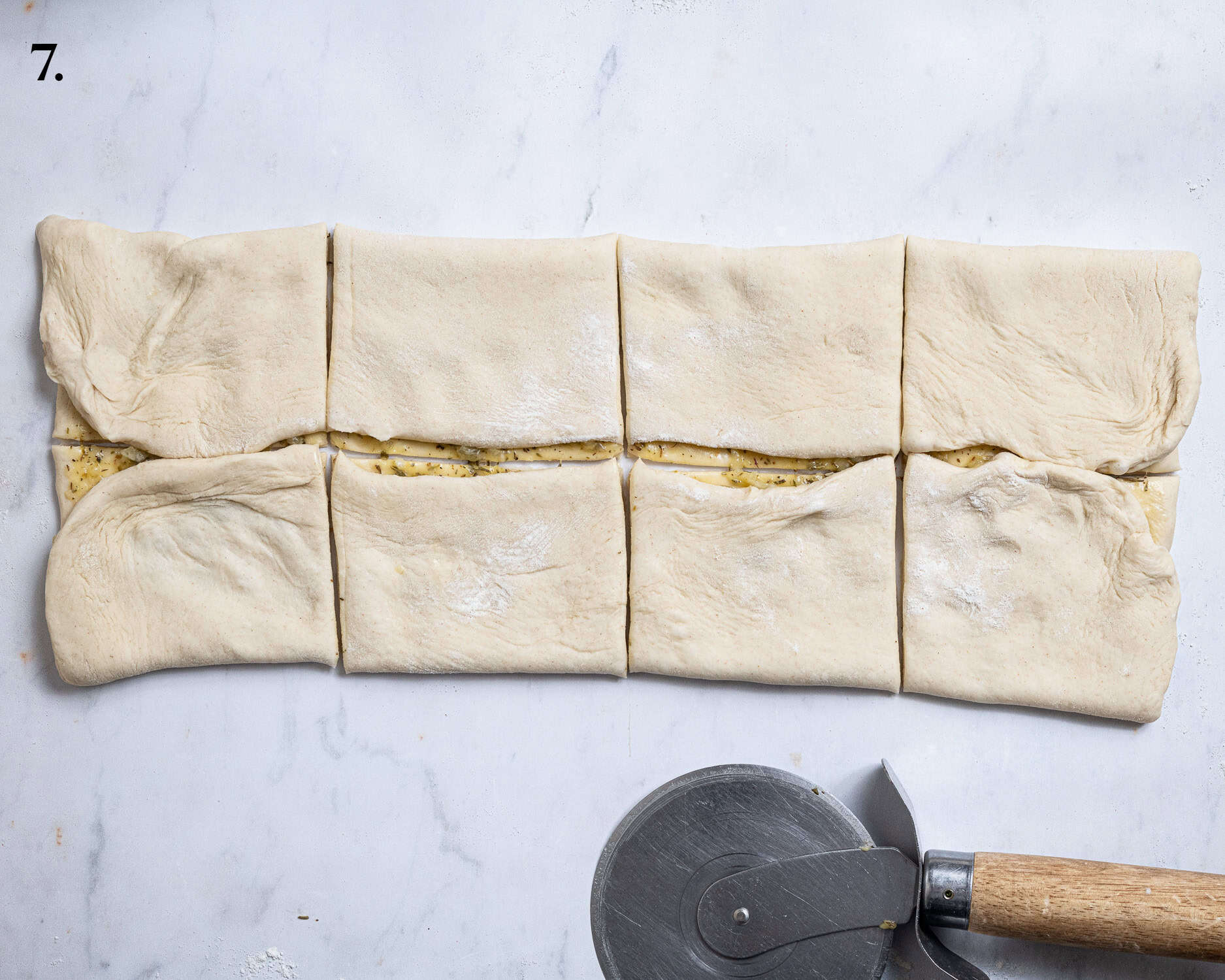
- Step 7: Slice each half into four squares, to make a total of eight squares. Repeat with the other half of dough to make a total of 16 squares.
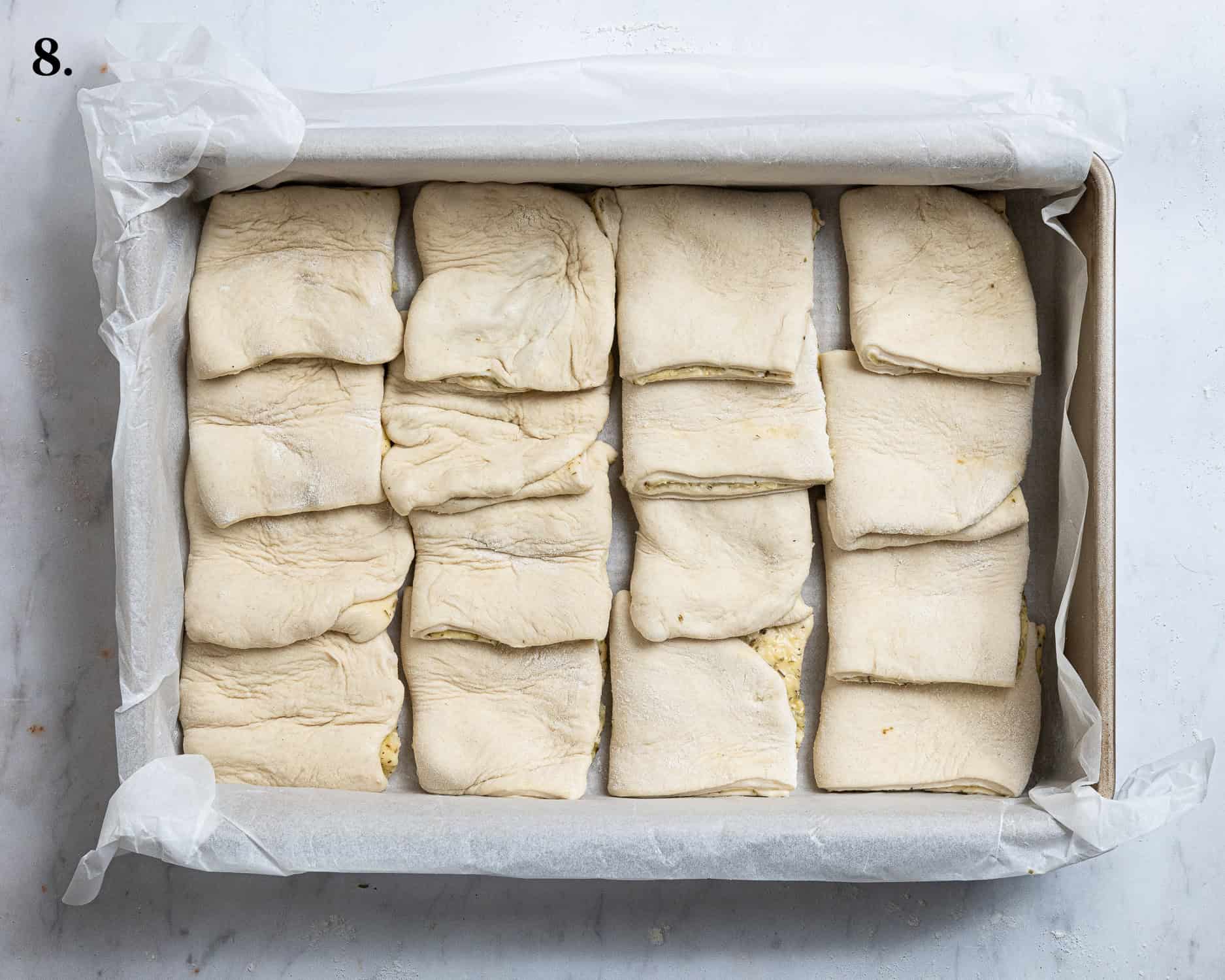
- Step 8: Arrange the squares in a lined 23 x 33 cm tin, overlapping them slightly if needed to make them fit.
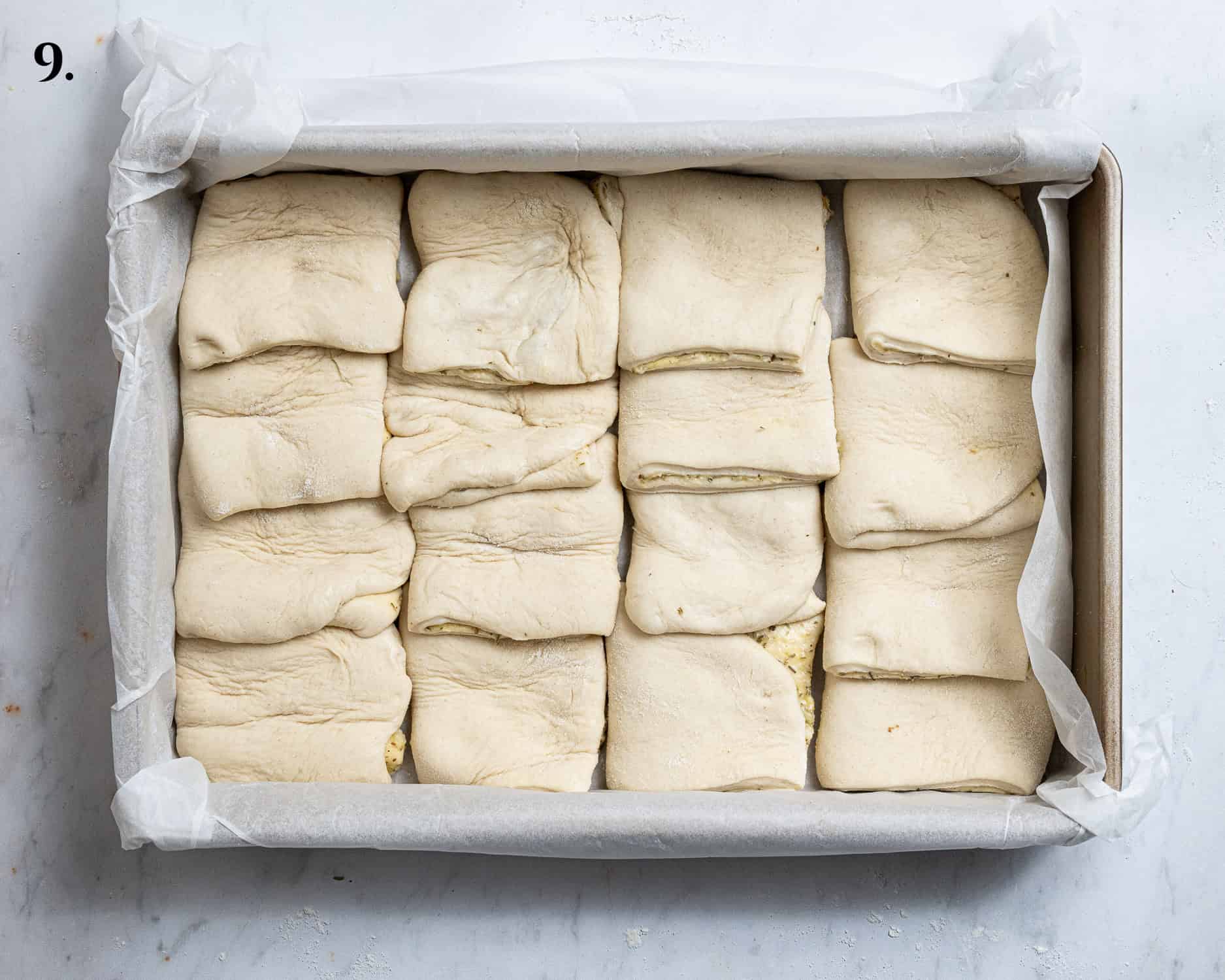
- Step 9: Cover and set aside to rise until puffy, about 45 minutes.
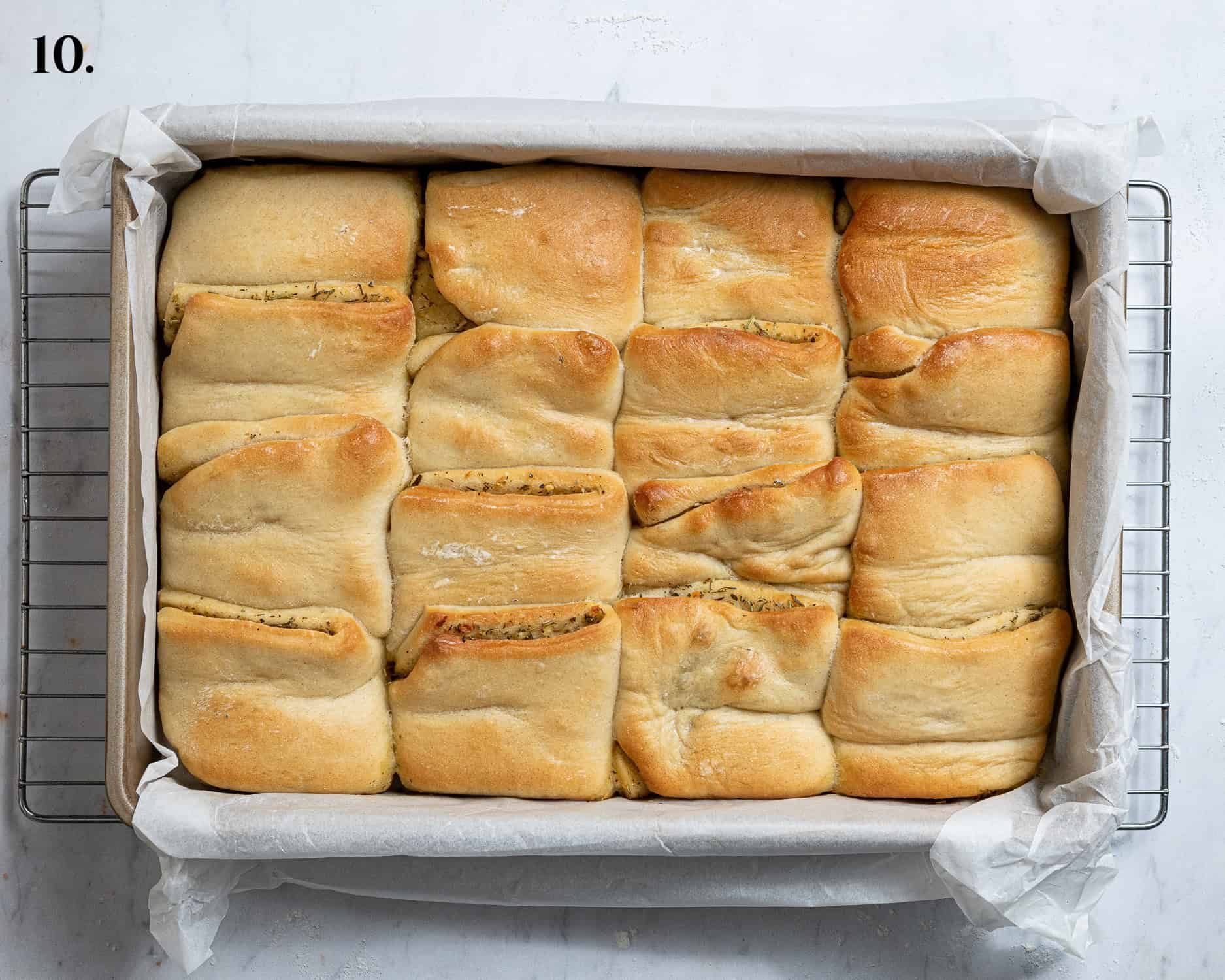
- Step 10: Brush with milk and bake for 25 minutes.
Top Tips:
USE SCALES. As with all of my baking recipes I really do recommend using the metric measurements with a digital scales rather than the cup conversions. Cups are a wildly inaccurate measuring system and you will get far better, more consistent results using a scale, not to mention that it is also easier and less messy than cups!
Tablespoon and teaspoon measurements are for proper measuring spoons, NOT regular kitchen spoons. A Tablespoon is 15ml and a teaspoon is 5ml and they should be level, not heaped.
Make sure that your yeast isn't out of date! Old yeast can lead to dough that doesn’t rise.
The rising time of the dough will vary depending on how warm it is; on hot days it will rise much faster than on cold ones.
If you want, you can give the dough it’s first rise overnight in the fridge rather than at room temperature. This breaks up the workload and gives the bread an even better flavour.
The best way to tell if a loaf of bread is cooked in the middle is to use a probe thermometer. It is impossible to give a one-size-fits-all baking time as ovens vary so much. The bread should be done when it reaches 90°C / 195°F.
If you want you could add a couple of big handfuls of chopped fresh herbs to the garlic butter instead of the dried herbs.
Alternative Shaping Method:
There are a few different ways of shaping Parker House rolls, one alternative method to the one detailed in the recipe is to shape the rolls individually into folded crescents.
To do this, divide the risen dough into 16 equal pieces (use a scale for accuracy) and shape each one into a ball. One at a time, roll them out on a lightly floured surface into an oval shape. Brush the surface with melted butter then fold them in half.
You can either arrange them slightly overlapping in a lined 23 x 33 cm/9 x 13 in tin, or for individual rolls that you do not need to pull apart you can place them spaced apart on a couple of lined baking sheets.
FAQ's:
These garlic Parker House rolls are best eaten on the day they are baked, but they will keep for 2-3 days well wrapped in the fridge. Warm them through in the microwave or a low oven to refresh them before serving.
I wouldn't necessarily recommend making and freezing the rolls in advance of serving, but any leftovers can be frozen, well wrapped, for up to 3 months. Allow to defrost at room temperature then warm through to serve.
Yes absolutely, use the same shaping method but just brush the dough with plain melted butter, omitting the garlic and herbs. You may find that you need slightly less butter than for the garlic version, about 60 to 80g (¼ - ⅓ cup) depending on how buttery you want them.
This is a soft, sticky dough so it is easiest made in a stand mixer. You absolutely can knead it by hand if you don't have one, just be prepared to get a bit messy.
When kneading, you shouldn't flour the surface as you will end up incorporating too much flour and making the dough too dry. Instead, if the dough is sticking too much, you can lightly oil the worksurface and your hands to help, or just be prepared to get a bit sticky!
A bench scraper is incredibly handy when kneading dough by hand to unstick the dough from the surface.
No, I’m afraid that you cannot use gluten free flour. Making gluten free bread is tricky and the entire recipe would need reworking. Gluten free baking is not my area of expertise so I cannot advise you. It is best to use a recipe that is designed to be gluten free rather than trying to adapt a non gluten free recipe.



If you love this recipe, please leave a 5-star ★★★★★ rating at the bottom of the page! This provides helpful feedback to both me and other readers.
Also be sure to add us as a trusted site on Google so that our recipes show up more in your searches!
To keep up to date with all my latest recipes you can subscribe to my newsletter and follow along on social media!
Garlic Parker House Rolls (vegan)
Ingredients
Dough:
- 500 g (4 cups) white bread flour
- 8 g (2 ¼ teaspoons) instant/fast action yeast
- 10 g (1 ½ teaspoons) table salt
- 160 g (⅔ cup) unsweetened non-dairy milk (I use soy)
- 180 g (¾ cup) lukewarm water
- 1 Tablespoon maple syrup or sugar
- 50 g (3 ½ Tablespoons) vegan block butter softened
To Assemble:
- 90 (6 Tablespoons) vegan block butter melted and cooled slightly
- 6 cloves garlic peeled and crushed
- 2 teaspoons mixed dried herbs
- milk and melted butter for brushing
Instructions
- To make the dough, place the bread flour in a large bowl or the bowl of a stand mixer fitted with a dough hook, add the yeast to one side and the salt to the other, stir to combine.500 g (4 cups) white bread flour, 8 g (2 ¼ teaspoons) instant/fast action yeast, 10 g (1 ½ teaspoons) table salt
- Add the milk, lukewarm water and the maple syrup and mix to form a shaggy dough. Knead with the mixer or turn out onto an un-floured surface and knead for 5-10 minutes until smooth and elastic. The dough will be sticky at first but resist the temptation to add extra flour, it will become smooth after a minute or two of kneading (you may need to scrape it off the surface with a dough scraper).160 g (⅔ cup) unsweetened non-dairy milk (I use soy), 180 g (¾ cup) lukewarm water, 1 Tablespoon maple syrup or sugar
- Add the softened vegan butter. Continue to knead until the butter is fully incorporated and the dough is smooth and elastic. It may seem greasy and messy at first but keep kneading and I promise you the butter will all mix in and the dough will become smooth.50 g (3 ½ Tablespoons) vegan block butter
- Once the butter is fully incorporated the dough should look smooth and silky and it should pass the windowpane test (you should be able to stretch a portion of the dough thin enough to see light through it without it tearing). It should still be soft and slightly sticky however.
- Place the dough in a lightly oiled bowl, cover and set aside to rise in a warm spot until doubled in size, about 1-2 hours. Line a 23 x 33 cm/9 x 13 in tin with baking paper.
- Punch down the risen dough, divide it in half and shape each one into a ball. Cover and set aside to rest for 15 minutes.
- Mix together the melted butter, crushed garlic and mixed dried herbs. Line a 23 x 33 cm/9 x 13 in cake tin with baking paper.90 (6 Tablespoons) vegan block butter, 6 cloves garlic, 2 teaspoons mixed dried herbs
- Roll one of the balls of dough out on a lightly floured surface into a rectangle, approximately 20 x 30 cm/8 x 12 in.
- Brush the surface of the dough all over with half of the garlic butter then slice the rectangle in half lengthways.
- Fold each half in half lengthways. Slice each half crosswise into four squares, to make a total of eight squares. Repeat with the other half of the dough to make a total of 16 folded squares.
- Arrange the squares in the lined tin, overlapping them slightly if needed to make them fit. I do four rows of four.
- Cover and set aside to rise until puffy but not yet doubled, about 45 minutes. Meanwhile, preheat the oven to 180°C/160°C fan/350°F/gas mark 4.
- Gently brush the tops of the risen rolls with milk, then bake for 25 minutes until browned and the temperature in the centre registers at least 90°C/194°F on a probe thermometer.
- Remove them from the oven, and optionally brush with extra melted butter. Allow to cool for 20 minutes before serving.
Notes
- See post above for tips, details and step-by-step photos. If you have a question about the recipe I may have already answered it above!
- As with all of my baking recipes I really do recommend using the metric measurements with a digital scale rather than the cup conversions. Cups are a wildly inaccurate measuring system and you will get far better, more consistent results using a scale, not to mention that it is also easier and less messy than cups!
- Tablespoon and teaspoon measurements are for proper measuring spoons, NOT regular kitchen spoons. A Tablespoon is 15ml and a teaspoon is 5ml and they should be level, not heaped.
- If you want, you can give the dough it’s first rise overnight in the fridge rather than at room temperature. This breaks up the workload and gives the bread an even better flavour.
- If you want you could add a couple of big handfuls of chopped fresh herbs to the garlic butter instead of the dried herbs.
Heather Smith Thomassen
Another great recipe that I probably can’t use . I am fine with gluten per se but I am wheat intolerant. I substitute with spelt and find this works well. When it comes to bread flour, however, I’m not sure where I stand. Would spelt flour be an appropriate substitute, would I need an additive? Is there a suitable substitute within gluten flours other than wheat? Please advise.
Hannah
Hi Heather, unfortunately I don't have much experience of baking with spelt flour but as far as I am aware it behaves quite differently to regular bread flour and would need a different quantity of liquid so it would be best to find bread recipes that are designed to be made with spelt.